
Refrigerant Recovery Pro is reader-supported: some links on this page are affiliate links, and as an Amazon Associate Refrigerant Recovery Pro earns from qualifying purchases at no extra cost to you. Learn more.
Flow rate for swimming pool heat pumps is the volume of water, measured in gallons per minute (GPM), that the unit moves through its internal heat exchanger. You must match this flow rate to the specific circulation requirements of your pool’s plumbing to ensure the water reaches the desired temperature without causing pressure issues.
If your electrical setup requires a specific power source, see our guide to 220v outlet heat pumps.
Which Flow Rate Suits Your Swimming Pool Heat Pump?
| If this is you | The Flow Rate that suits you | Why |
|---|---|---|
| You have a small residential spa or a very small plunge pool. | Low GPM (typically under 30 GPM) | Smaller bodies of water require less volume movement to maintain heat, and a low flow rate prevents over-pressurizing small-diameter pipes. |
| You own a standard backyard swimming pool with a basic circulation system. | Medium GPM (30 to 60 GPM) | Most residential systems are designed to move a moderate volume of water, balancing heat transfer efficiency with standard pipe sizes. |
| You have a large commercial pool or a high-turnover residential pool. | High GPM (over 60 GPM) | Large volumes require significant water movement to distribute heat evenly, necessitating a high flow rate to keep up with the demand of the total water mass. |
| You use a multi-port valve or a complex multi-zone heating system. | Variable or specific GPM | The flow rate must match the specific branch of the plumbing being heated, as different zones may have different flow requirements based on their individual volumes. |
Products in this category with a full review here
From $699 to $1499: 3 of the 15 in this category we have reviewed in full.
Homeowners with temporary setups should view our top picks for above ground pools.
For those with limited space, we recommend exploring heat pumps for small pools.

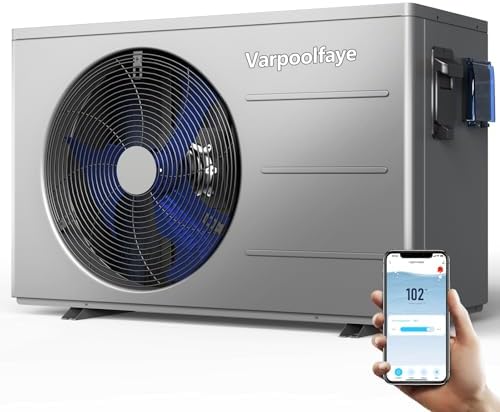

How Do You Measure the Required Flow Rate for Your Pool?
Determining the correct flow rate for your swimming pool heat pump involves identifying the GPM your current plumbing system can handle. Most residential pool pumps are rated by their horsepower and the resulting flow rate, which is usually printed on the manufacturer’s nameplate located on the pump housing. This nameplate provides the maximum GPM the pump can move, which serves as the upper limit for the heat pump’s requirements.
Larger bodies of water require more power, so view our large pool heat pump comparison.
If you need a dual-purpose system, compare the best heating and cooling models.
Calculating required flow rate based on pool volume and turnover
You can also calculate the required flow rate based on your pool’s volume and desired turnover rate. If you know your pool holds 20,000 gallons and you want to turn over the entire volume every 6 hours, you divide 20,000 by 360 (the number of minutes in 6 hours) to find a required flow of approximately 55.5 GPM. This calculation ensures the water moves fast enough to be heated but slow enough to allow the heat pump to extract energy from the water effectively.
Proper installation varies by site, so find the best inground pool heat pump.
Verifying pipe diameters can support the selected heat pump flow
Check your existing pipe diameters to ensure they can support the GPM you select. A common bottleneck occurs when a high-flow heat pump is paired with 1.5-inch piping, which may restrict flow and cause the unit to overheat or operate inefficiently. Verifying that your plumbing can support the GPM listed on the heat pump’s specifications is a necessary step before ordering. Because installation involves specific plumbing configurations, a qualified installer should verify these flow requirements to ensure the system operates within the manufacturer’s stated limits.
You can manage your temperature from your phone by viewing heat pumps with wifi control.
For residential setups with standard plugs, see our options for 110v outlet units.
What Happens if the Flow Rate is Too High or Too Low?
A flow rate that is too high for your plumbing system creates excessive pressure, which can lead to leaks or damaged seals in your pool’s piping. When water moves faster than the pipes are designed to handle, the friction against the pipe walls increases, potentially causing the pump to work harder and consume more electricity without increasing the heating output. You might notice a whistling sound in the pipes or a noticeable drop in pressure at the pool’s return jets.
Understanding your power needs is vital, so learn about swimming pool heat pump operating voltages.
Efficiency ratings matter for your utility bill; see how much COP you actually need.
Low flow rates reduce heat transfer and shorten heat pump life
If the flow rate is too low, the swimming pool heat pump may struggle to transfer enough heat to the water. Because the heat pump relies on a specific “dwell time” where water passes over the heat exchanger, moving the water too slowly means less water is being heated per minute. This results in a longer time to reach the target temperature and can cause the heat pump to cycle on and off frequently, which may shorten the lifespan of the internal components. You may find that the water near the inlet stays cool while the water near the outlet feels warm, indicating poor distribution.
To understand the different technologies available, explore the different types of pool heat pumps.
Beginners can start by learning how a swimming pool heat pump works.
Choosing a flow rate that does not match your pool’s circulation needs can result in a system that fails to heat the water during cold nights. If the flow is insufficient, the heat pump may run constantly but fail to raise the temperature, leading to wasted energy costs and a frustrated user. Conversely, an incorrect high flow can lead to a costly plumbing repair if a joint fails under the stress of the pressure.
Safety is a priority, so review the heat pump safety standards and certifications.
What Should You Do if Your Requirement Falls Between Two Flow Rates?
When your calculated requirement falls between two standard flow rate options, you should generally choose the lower of the two values. In swimming pool heat pump systems, a lower flow rate is safer for your existing plumbing because it minimizes the risk of over-pressurizing the pipes. If the flow rate is slightly lower than your ideal turnover calculation, the heat pump will simply take a few minutes longer to move the water through the system, which does not affect the final temperature of the pool.
Budgeting is the first step, so see what different price levels offer.
High-capacity units are available, such as our full 58000 BTU Heat Pump review.
Selecting lower flow rates prevents mechanical failure and pressure hazards
Selecting the lower flow rate ensures that your pump and pipes are not pushed to their mechanical limits. If you choose the higher flow rate and your pipes cannot handle the volume, you may face a total system failure or a significant leak. It is better to have a system that moves slightly less water than required than a system that creates a pressure hazard. If the flow rate is still too low to heat the pool effectively, you may need to consider a heat pump with a higher heating capacity rather than a higher flow rate.
For specific volume needs, read our Vidapool VTX016 spec breakdown.
Smaller setups can benefit from the KSPF-005L3R1A1 Heat Pump review.
Matching heat pump flow requirements with existing pump GPM ratings
Consider the limitations of your current pump’s GPM rating as the primary constraint. If your current pump is rated for 50 GPM, you should not select a heat pump that requires 60 GPM to function correctly. The flow rate must be supported by the pump’s ability to push that volume of water through the entire circuit. If your requirements conflict with your current hardware, a qualified installer can help determine if a pump upgrade is necessary to support the heat pump’s flow requirements.
We also provide the WOPOLTOP RCDF-035 full spec review.
More swimming pool heat pump explainers and comparisons
- Best Swimming Pool Heat Pumps for Small Pools
- Swimming Pool Heat Pumps for Large Pools Compared
- Choosing the Best Swimming Pool Heat Pump with Wifi Control
- The Swimming Pool Heat Pumps That Work Best for Heating and Cooling
- Which Swimming Pool Heat Pump Is Best for 110v Outlets?
- Best Swimming Pool Heat Pumps for 220v Outlets