
Refrigerant Recovery Pro is reader-supported: some links on this page are affiliate links, and as an Amazon Associate Refrigerant Recovery Pro earns from qualifying purchases at no extra cost to you. Learn more.
A swimming pool heat pump is a system that uses a refrigeration cycle to transfer heat from the surrounding air into the water of a pool. You need a heat pump when you want to maintain a consistent swimming temperature without the high fuel costs of gas or propane. To determine if a heat pump suits your needs, you must first measure your pool’s total volume in gallons or litres.
How a pool heat pump prevents rapid water heat loss
Most pool owners face the problem of rapid heat loss. Water has a high thermal mass, meaning it takes a significant amount of energy to raise its temperature, but once heated, it loses that energy to the air and ground as the day cools. A heat pump solves this by providing a continuous, automated method of heat injection, ensuring the water stays at a usable temperature even during periods of low solar gain or overnight cooling.
For permanent installations, we have identified the best swimming pool heat pump for inground pools.
How a Swimming Pool Heat Pump Works
The mechanism of a pool heat pump relies on the principles of thermodynamics to move heat rather than create it. The process follows a specific sequence of physical changes:
- The system draws in large volumes of ambient air through an intake.
- A refrigerant fluid circiles through the internal components, absorbing heat from the air as it passes over the evaporator coils.
- The compressor increases the pressure of the refrigerant, which causes its temperature to rise significantly.
- The heated refrigerant passes through the condenser coils, where it transfers its heat to the water flowing through the heat exchanger.
- The refrigerant then expands back into a low-pressure gas, cooling down so the cycle can begin again.
- The fan motor pushes the cooled air out of the unit, while the heated water returns to the pool.
Swimming Pool Heat Pumps we have reviewed in detail
Prices across these 3 run from $526.99 to $1979.10; each one has a full review here.
Smaller bodies of water require specific units, so view the best swimming pool heat pump for small pools.
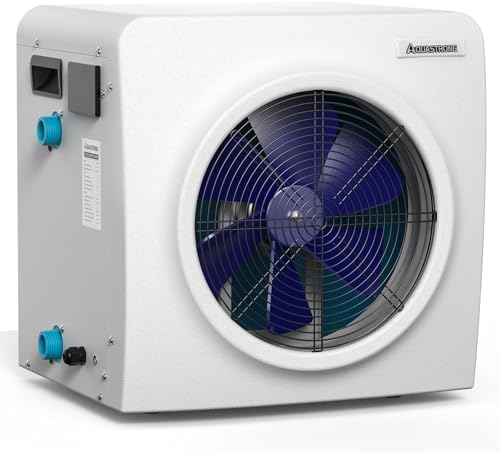
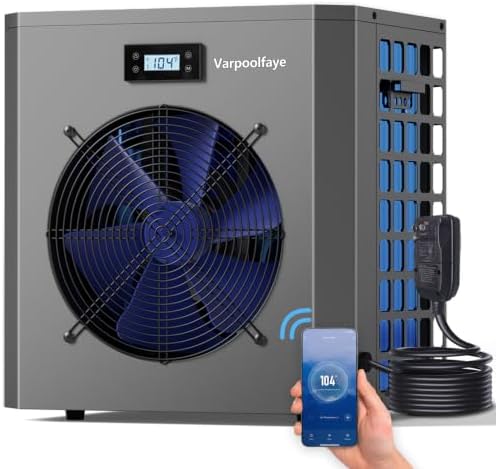

Parts and Standards That Matter to a Buyer
The performance and longevity of a pool heat pump depend on specific internal components and the materials used to build them. Understanding these parts helps you identify which features provide actual durability versus marketing claims.
For standard household outlets, browse the best swimming pool heat pump for 110v outlets.
The Role of the Heat Exchanger
The heat exchanger is the component where the actual transfer of thermal energy occurs between the refrigerant and the pool water. The material of this part determines the resistance to corrosion and chemical degradation over time. You should look for a Titanium vs. Copper Heat Exchanger distinction; titanium offers superior resistance to the harsh chemicals and salt found in many pool environments, whereas copper may degrade faster in high-salinity setups.
How Compressor Efficiency and Capacity Dictate Heating Power
The compressor is the heart of the system and dictates the heating capacity and energy efficiency of the unit. The choice between Inverter vs. Fixed Speed Compressors determines variable speed energy savings versus constant output and higher electricity costs. An inverter compressor can throttle its power up or down to match the exact heat load required, whereas a fixed speed model runs at 100% capacity until the target temperature is met, often leading to more frequent cycling and higher energy waste.
Before purchasing, you should learn swimming pool heat pump terms and specs to ensure you understand the technical data.
How Fan Motor Design Influences Airflow and Noise Levels
The fan motor determines the airflow volume and noise level of the unit. Because the heat pump must process massive amounts of air to heat a large volume of water, the fan’s ability to move air quietly is a primary factor in backyard placement. A high-volume fan ensures the unit can reach its rated heating capacity even when the air is relatively still.
Selecting the right pump requires you to understand flow rate for swimming pool heat pumps to match your plumbing.
What Having a Pool Heat Pump Changes in Practice
A heat pump changes your swimming experience by providing a consistent “ready-to-use” state for your pool. In practice, this means you can swim at 82°F (28°C) in the early morning or late evening when the air temperature has dropped. Without a heat pump, these times are often unusable because the water temperature follows the ambient air temperature, dropping significantly as soon as the sun sets.
When a pool heat pump provides the most utility during seasons
The difference shows up most clearly in the transition seasons of spring and autumn. During these months, solar gain is insufficient to keep a pool warm, but the air temperature is still high enough for a heat pump to operate efficiently. Conversely, the difference does not show up as much in the peak of summer, where solar heating often provides enough warmth to reach your target temperature without mechanical assistance. If you only plan to swim during midday in July, the investment in a heat pump provides less utility than for a user who wants a year-round swimming schedule.
Different models use different technologies, so explore the different types of swimming pool heat pumps.
How much will it cost to run this thing every month?
The monthly cost to run a swimming pool heat pump depends on the COP (Coefficient of Performance), which measures the efficiency of heat produced relative to electricity consumed. A high COP means the unit produces more heat for every watt of electricity used. Because the system only runs when the water temperature drops below your set point, the monthly cost is often lower than expected, especially during milder weather. To estimate your cost, you must calculate your pool’s volume and the temperature difference you wish to maintain.
For a deep dive into a high-efficiency inverter, see our full ECOPOOLTECH EE100 review.
How does this compare to a gas heater in terms of speed?
A gas heater typically heats water much faster than a swimming pool heat pump because it generates heat through combustion rather than moving it from the air. While a gas heater can raise the temperature of a pool in a few hours, a heat pump is designed for steady, incremental temperature maintenance. If you need to heat a cold pool from 60°F to 80°F in a single afternoon, a gas heater is the faster tool; for maintaining that 80°F throughout the week, a heat pump is the more efficient choice.
How does the inverter compressor compare to a standard single-speed model?
An inverter compressor offers superior energy efficiency by adjusting its speed to match the specific heating demand of the water. A standard single-speed model acts like a light switch, turning fully on or fully off, which can cause temperature fluctuations and higher electricity spikes. Inverter models allow for a more stable temperature curve and lower operational costs, though they typically require a higher initial purchase price.
If you need massive output, look at our spec breakdown of the 58000 BTU Heat Pump.
How much will my monthly electricity bill go up running this?
Your monthly electricity bill will increase based on the amount of time the unit needs to run to maintain your desired temperature. Because heat pumps are highly efficient, the increase is often less than the cost of running a gas heater for the same duration. The cost is highest when the difference between the air temperature and your target water temperature is large, as the system must work harder to bridge that gap.
You can find detailed performance data in our full Vidapool VTX016 review.
Does it work well in colder climates or only in warm weather?
A swimming pool heat pump works best in warm weather because it relies on ambient air as its heat source. Most units have a low-temperature cutoff, meaning they will stop producing heat if the air temperature drops below a certain point, typically around 45°F (7°C). In very cold climates, a heat pump cannot provide enough heat to keep a pool warm during winter because there is not enough thermal energy in the freezing air to extract. For those in cold climates, a heat pump is best used to extend the swimming season into the warmer months rather than for year-round heating.
Who Needs a Swimming Pool Heat Pump
You need a swimming pool heat pump if you intend to swim during the evening, early morning, or during the shoulder seasons of spring and fall. It is also a necessity if you live in a climate where the air stays above 50°F for several months of the year but the sun does not provide enough heat to keep the water comfortable. If your goal is to have a pool that is always ready for a swim regardless of the time of day, the heat pump provides that consistency.
For an electric heating alternative, view our full XKP2207BP Pool Heater review.
Situations where a swimming pool heat pump is unnecessary
You do not need a swimming pool heat pump if you only swim during the hottest parts of the day in a tropical climate where solar heating is sufficient. It is also unnecessary if you are comfortable with water temperatures that fluctuate significantly with the outdoor temperature. For these users, the cost of the unit and the ongoing electricity consumption would provide little practical benefit compared to the free energy provided by the sun.
The other pool heat pump guides we have published
- The Swimming Pool Heat Pumps That Work Best for Above Ground Pools
- Which Swimming Pool Heat Pump Is Best for Inground Pools?
- Best Swimming Pool Heat Pumps for Small Pools
- Swimming Pool Heat Pumps for Large Pools Compared
- Choosing the Best Swimming Pool Heat Pump with Wifi Control
- The Swimming Pool Heat Pumps That Work Best for Heating and Cooling