
Refrigerant Recovery Pro is reader-supported: some links on this page are affiliate links, and as an Amazon Associate Refrigerant Recovery Pro earns from qualifying purchases at no extra cost to you. Learn more.
Heating capacity for a swimming pool heat pump should range from 40,000 BTU to 150,000 BTU depending on the volume of water and the desired temperature increase. You need a unit that provides enough thermal power to reach your target temperature within a reasonable timeframe, typically requiring a higher BTU rating for larger pools or colder climates.
Recommended Heating Capacity for Swimming Pool Heat Pumps
| Use Case | Recommended Heating Capacity | Why this number? |
|---|---|---|
| Small above ground pool (5,000 gallons) | 40,000 to 60,000 BTU | Calculated to provide sufficient heat for a 5,000 gallon volume. |
| Standard inground pool (15,000 gallons) | 100,000 to 150,000 BTU | Required to effectively heat 15,000 gallons of water. |
| Overnight temperature maintenance | 80,000 to 120,000 BTU | Provides the steady thermal output needed to combat overnight heat loss. |
| Simultaneous heating and cooling | 40,000 to 150,000 BTU | Depends on the specific volume and the required temperature swing. |
Swimming Pool Heat Pumps we have reviewed in detail
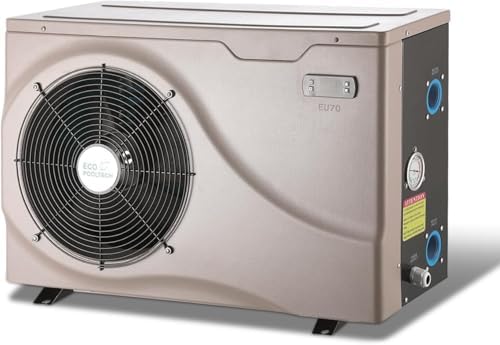
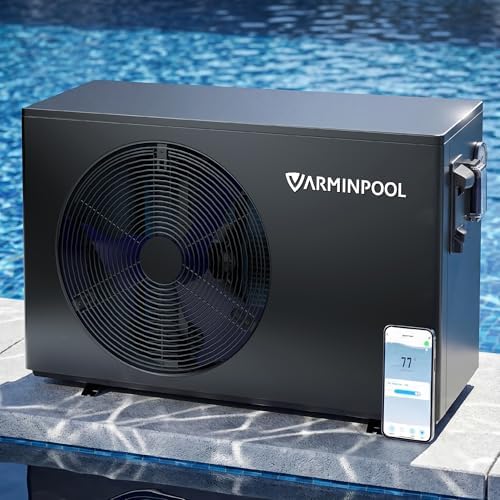
Prices across these 3 run from $1099.99 to $1499; each one has a full review here.
If you have a 3000-gallon setup, look at our full AQUASTRONG HEX012-001 review for a detailed spec breakdown.

What happens if you underbuy or overbuy swimming pool heat pump capacity?
Underbuying heating capacity means the swimming pool heat pump will struggle to raise the water temperature during periods of low solar gain or cold air. If the BTU output is too low for the pool volume, the unit may run continuously without reaching the desired set point. This leads to a situation where the water remains uncomfortably cool despite the system being active. You might find that the pool only reaches a usable temperature during the peak of a hot summer day, failing to provide warmth when it is actually needed.
Overbuying pool heat pump capacity causes rapid temperature fluctuations and wear
Overbuying heating capacity involves purchasing a unit with a significantly higher BTU rating than your pool volume requires. While a larger unit will heat the water faster, it can lead to rapid temperature fluctuations that are difficult to regulate. If the system is too powerful for a small body of water, the temperature may spike quickly, requiring the unit to cycle on and off frequently. This constant cycling can increase wear on the internal components of the pool heat pump. Furthermore, you pay a higher upfront cost for capacity that your specific pool volume cannot utilize.
High-output systems are available, and you can see our full 58000 BTU Heat Pump review for more data.
What is the most common mistake with swimming pool heat pump capacity?
The most common mistake is selecting a swimming pool heat pump based solely on the maximum BTU rating without considering the actual volume of water to be heated. Buyers often assume a higher number is always better, but heating capacity is a measure of the rate of heat transfer, not the total amount of heat stored in the pool. A 140,000 BTU unit is only effective if the pool volume is large enough to absorb that energy. If you have a 5,000 gallon pool, a massive industrial-scale unit will provide no practical benefit over a correctly sized 60,000 BTU model.
Instead of focusing only on the maximum BTU, you should optimize for the “time to temperature” requirement. Consider how quickly you want the water to warm up from a base temperature of 60°F to a comfortable 82°F. If you need that jump in two hours, you require a higher BTU per gallon ratio than if you are willing to let the pool warm up over the course of an entire day. For example, if you are preparing for a weekend swim, a higher BTU rating allows you to reach your goal faster. How many hours of operation do you want to spend before the pool is ready? A 100,000 BTU unit might reach that goal in three hours for a medium pool, whereas a smaller unit might take eight hours.
For a high-capacity 32,000-gallon option, view our full Vidapool VTX016 review to see the technical specifications.
How does heating capacity interact with other swimming pool heat pump specs?
Heating capacity is limited by the Coefficient of Performance (COP) and the flow rate of the water. The COP measures the efficiency of heat produced relative to electricity consumed; a higher COP means more heat is generated for every unit of electricity used. If a pool heat pump has a high heating capacity but a low COP, the operational cost to achieve that heat will be significantly higher. You should look for a balance where the BTU output provides the necessary speed while the COP ensures the energy cost remains manageable.
Plumbing flow rate and pipe diameter limits for heat pump output
Flow rate and pipe diameter also dictate the practical limits of the heating capacity. Even if a swimming pool heat pump states a high BTU output, that heat can only be transferred into the water as quickly as the water moves through the heat exchanger. This creates a bottleneck where the high heating capacity is wasted because the water cannot move through the system fast enough to absorb the energy. Ensure your plumbing can handle the flow required by the heat pump’s rated capacity.
Compact requirements can be met by looking at our full KSPF-005L3R1A1 Heat Pump review for a detailed analysis.
How ambient air temperature and humidity affect pool heat pump performance
Environmental factors like air temperature and humidity also influence how much of the rated heating capacity is actually delivered. In very cold environments, the efficiency of the heat exchange process can drop. A swimming pool heat pump rated for 100,000 BTU might produce less of that output when the ambient air is near freezing compared to when it is 70°F. When evaluating your needs, it is wise to choose a unit that provides a comfortable buffer above your calculated requirements to account for these environmental fluctuations. You should check the local minimum winter temperature for your area to determine if the heat pump’s performance remains adequate during the coldest months.
Browse our other pool heat pump pages
- Best Swimming Pool Heat Pumps for 220v Outlets
- The Swimming Pool Heat Pumps That Work Best for Above Ground Pools
- Which Swimming Pool Heat Pump Is Best for Inground Pools?
- Best Swimming Pool Heat Pumps for Small Pools
- Swimming Pool Heat Pumps for Large Pools Compared
- Choosing the Best Swimming Pool Heat Pump with Wifi Control