
Refrigerant Recovery Pro is reader-supported: some links on this page are affiliate links, and as an Amazon Associate Refrigerant Recovery Pro earns from qualifying purchases at no extra cost to you. Learn more.
Swimming pool heat pumps typically cost between $498 and $6,499, with most buyers selecting models in the $549 to $1,949 range. As the price rises, the heating capacity increases significantly, moving from a median of 16,000 BTU at the entry level to 107,800 BTU at the top end.
Swimming Pool Heat Pump Price Levels at a Glance
| Price level | Price range | Products | Median heating capacity | Median COP (coefficient of performance) | Median rating |
|---|---|---|---|---|---|
| Entry level | $498 to $549 | 7 | 16,000 BTU | 5.5 Ratio | 3.6 |
| Lower mid-range | $549.49 to $888.22 | 7 | 16,500 BTU | 4.7 Ratio | 3.8 |
| Upper mid-range | $1099.99 to $1949.99 | 7 | 33,000 BTU | 5.5 Ratio | 4.0 |
| Top end | $1979.10 to $6499.99 | 8 | 107,800 BTU | 11 Ratio | 4.1 |
Products in this category with a full review here
From $1261.99 to $2564.04: 3 of the 15 in this category we have reviewed in full.

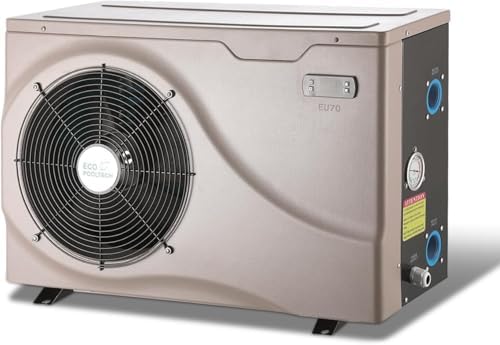

What does an entry level swimming pool heat pump provide?
An entry level swimming pool heat pump provides a median heating capacity of 16,000 BTU and a median COP (coefficient of performance) of 5.5. The COP is a measure of heat efficiency, where a 5.5 ratio means the unit produces 5.5 units of heat for every 1 unit of electricity consumed. This price point, which averages around $539, is suitable for small, above-ground pools or very small spas where only a modest temperature lift is required.
You can find the top-rated 220v outlet heat pump options to suit your electrical setup.
Entry level pool heat pumps have lower heating capacity and slower recovery
At this level, the trade-off involves a lower heating capacity and potentially slower temperature recovery during cold nights. While these units meet the COP (coefficient of performance) 4.0+ reference figure—the benchmark where efficiency becomes viable for residential use—they may struggle to heat larger volumes of water quickly. If your pool volume exceeds 5,000 gallons, an entry level unit may run constantly without reaching the desired temperature.
What does a lower mid-range swimming pool heat pump provide?
A lower mid-range swimming pool heat pump provides a median heating capacity of 16,500 BTU and a median COP (coefficient of performance) of 4.7. With a median price of $649, these units offer a slight increase in heating capacity over the entry level while maintaining efficient operation. This range suits owners of small backyard pools who need a reliable, consistent heat source but do not require the massive output of larger systems.
Mid-range heat pumps balance efficiency and cost for standard pool sizes
Choosing this level provides a stable balance of efficiency and cost, as 5 of the 5 units that state a COP figure meet the 4.0+ efficiency benchmark. Compared to the entry level, the increase in capacity is modest, but the reliability of the components often improves. However, these units still lack the high-BTU output required for larger residential pools, which typically require more than 30,000 BTU to heat effectively during low solar gain periods.
For a detailed performance breakdown, check out our full V7 Plus Heat Pump review.
What does an upper mid-range swimming pool heat pump provide?
An upper mid-range swimming pool heat pump provides a median heating capacity of 33,000 BTU and a median COP (coefficient of performance) of 5.5. These units, which average around $1,499, represent a significant step up in power, offering more than double the heating capacity of the lower mid-range options. This level is suitable for medium-sized residential pools where the goal is to maintain a comfortable swimming temperature consistently.
Upper mid-range heat pumps provide faster heat transfer for larger volumes
The primary advantage of the upper mid-range is the jump in heating capacity, which allows for faster heat transfer into the water. While the median price per unit of heating capacity is $0.04, the increased output ensures that the water reaches the target temperature in a reasonable timeframe. Compared to the lower mid-range, these units provide the necessary power for larger volumes, though they may still lack the extreme efficiency or massive output found in the top end of the market.
What does a top end swimming pool heat pump provide?
A top end swimming pool heat pump provides a median heating capacity of 107,800 BTU and a median COP (coefficient of performance) of 11. With a median price of $2,831.52, these units are designed for large residential pools or high-demand applications. The high COP of 11 means these units are exceptionally efficient, producing 11 units of heat for every 1 unit of electricity used.
You can find more technical data in our full MICOE MSHP-005Y1 review.
Top end heat pumps offer highest capacity and best value per BTU
This level provides the highest available heating capacity, making it the choice for large bodies of water where smaller units would fail to raise the temperature. The efficiency at this level is a significant jump, as 4 of the 4 units that state a COP figure reach this high performance. While the initial cost is the highest, the price per unit of heating capacity is $0.03, which is the same as the entry-level models, showing that the high-output units offer excellent value per BTU.
Where does paying more stop buying more for a pool heat pump?
Paying more stops buying more when the heating capacity no longer needs to scale with your specific pool volume. The data shows that the price per unit of heating capacity remains very stable across the spectrum, staying between $0.03 and $0.04 per BTU. This suggests that the cost of the hardware is tied closely to the output capacity rather than hidden “premium” features.
Detailed specifications are available in our full VARMINPOOL Heat Pump review.
Top end heat pumps provide triple the capacity of upper mid-range models
The gain flattens most significantly when moving from the upper mid-range to the top end. While the price jumps from a $1,499 median to a $2,831 median, the heating capacity more than triples to 107,800 BTU. If your pool requires less than 33,000 BTU, spending the extra $1,300 for a top-end unit provides no additional heating benefit for your specific volume. Conversely, if your pool requires 100,000 BTU, the upper mid-range unit is insufficient regardless of its price.
What should you budget for besides the pool heat pump?
Budgeting for a swimming pool heat pump requires accounting for the necessary infrastructure to move and manage the water. You will need PVC Piping to transport water from the pool to the heat pump, and the diameter of this piping must be sized correctly to ensure the required flow rate for heat transfer.
Flow switches and pool covers are required for heat pump efficiency
A Flow Switch is another required component, which prevents the unit from running without water circulation to avoid internal damage. To maximize the efficiency of the heat pump, a Pool Cover is a necessary investment to retain heat and reduce the workload on the heater during the night. These items are required for the system to function correctly and are separate from the cost of the heat pump itself.
Explore the technical specifications in our full KSPF-005L3R1A1 Heat Pump review.
How do you tell if a swimming pool heat pump is a fair price?
A fair price for a swimming pool heat pump is determined by the price per unit of heating capacity relative to the median values. For this category, a fair price is generally between $0.03 and $0.04 per BTU of heating capacity. If a unit’s price per BTU is significantly higher than these figures, you are paying for features that do not increase the actual rate of heat energy transferred into the water.
When evaluating a price, first identify the heating capacity in BTU. Divide the total price by the BTU figure to find your cost per unit of heat. If the result is $0.03, it aligns with the median value of the entry-level and top-end products. If it is $0.04, it aligns with the mid-range options. Prices were checked in November 2026; because retail prices move, use these medians as a benchmark for value rather than a fixed cost.
The rest of our swimming pool heat pump guides
- Best Swimming Pool Heat Pumps for Small Pools
- Swimming Pool Heat Pumps for Large Pools Compared
- Choosing the Best Swimming Pool Heat Pump with Wifi Control
- The Swimming Pool Heat Pumps That Work Best for Heating and Cooling
- Which Swimming Pool Heat Pump Is Best for 110v Outlets?
- Best Swimming Pool Heat Pumps for 220v Outlets