
Refrigerant Recovery Pro is reader-supported: some links on this page are affiliate links, and as an Amazon Associate Refrigerant Recovery Pro earns from qualifying purchases at no extra cost to you. Learn more.
Fan diameter for axial blowers is the measurement of the physical width of the rotating blades, typically expressed in inches. You determine the correct size by matching the blower’s air movement capacity to the specific volume of air your space requires to move.
Which Fan Diameter Suits Your Project?
| If this is you | The Fan Diameter that suits you | Why |
|---|---|---|
| You need to move air in a small desktop workspace or a small electronics enclosure. | 2 to 6 inches | Smaller diameters provide compact footprints for localized cooling where low-volume airflow is sufficient. |
| You are managing a standard household ventilation task or a small workshop area. | 8 to 12 inches | This range provides the common balance of airflow and noise for standard indoor ventilation. |
| You are moving large volumes of air in a warehouse or a large industrial shed. | 18 to 30 inches | Larger diameters allow for high-volume air movement without requiring excessive motor speeds. |
| You are operating a high-capacity industrial processing plant or large-scale cooling system. | 30 to 36 inches | Maximum diameter options provide the highest possible volume flow for large-scale industrial requirements. |
Where these choices show up in our reviews
From $135.99 to $408: 3 of the 15 in this category we have reviewed in full.

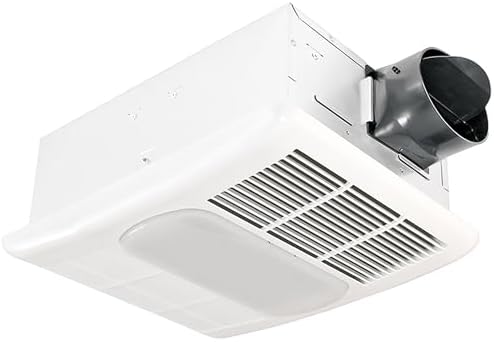

How to Measure and Establish Your Required Fan Diameter
To establish the correct fan diameter for an axial blower, you must first determine the total cubic feet per minute (CFM) your space requires. You find this requirement by calculating the volume of the area in cubic feet and determining the desired air changes per hour. For example, a room of 10 feet by 10 feet with 8-foot ceilings has a volume of 800 cubic feet.
If a standard blower doesn’t fit your needs, explore axial blower alternatives and other ways to get results.
Matching axial blower airflow capacity to required CFM
Once you have your required CFM, you look for an axial blower where the stated airflow capacity meets that number. Because fan diameter is a primary driver of airflow, you will find that larger diameters typically move more air at lower speeds. You should check the manufacturer’s data sheet for the “Airflow” or “Volume Flow Rate” to see how many cubic feet per minute that specific diameter provides.
Measuring clearance for axial blower housing and mounting hardware
Verify the physical mounting space before ordering. Measure the width and height of the opening where the blower will sit. The fan diameter must be smaller than your opening to allow for the housing and the mounting hardware. If the blower is 12 inches in diameter, you may need a 14-inch clearance to accommodate the outer frame.
For a more detailed look at a high-performance unit, see our full review of the AIRTITAN T8.
What Happens if the Fan Diameter is Too Small or Too Large?
Choosing a fan diameter that is too small for your requirements leads to insufficient air movement and potential system failure. If the blower cannot move the required volume of air, the air remains stagnant, causing heat build-up or poor ventilation. In a high-resistance environment, a small fan may also experience motor burnout because it cannot overcome the resistance of the ductwork or filters at the required speed.
How oversized axial blowers cause noise and backdrafting issues
A fan diameter that is too large for the space can create excessive noise and air velocity. When a large axial blower moves air through a small space, the velocity of the air can become uncomfortable or disruptive. Furthermore, a large diameter fan may create a high-pressure zone that causes backdrafting, where air is pushed into the wrong part of the building because the fan is moving more air than the surrounding vents can exhaust.
Consequences of choosing incorrect axial blower diameters for space
A buyer might start by measuring a small workbench, find a 4-inch blower, and realize it only moves 50 CFM. If the goal was to cool a large 10×10 room, that 4-inch diameter will fail to circulate air effectively, leaving the space hot. Conversely, installing a 30-inch industrial blower in a small closet will create a deafening roar and potentially push air out of every crack in the door, failing to provide controlled ventilation.
Solar-powered options are available if you view our full review of the iLiving Solar Roof Fan.
What to Do When Your Requirements Fall Between Two Fan Diameters?
When your required airflow falls between the capacities of two different fan diameters, you should choose the smaller diameter with a higher static pressure rating. Static pressure measures the ability to overcome resistance in the ductwork or filters. A smaller fan with high static pressure can often move the required amount of air through a restricted path more efficiently than a larger fan with low static pressure.
Selecting the smaller axial blower diameter for practical installation
If you are choosing between a 10-inch and a 12-inch axial blower and the requirements are nearly equal, the smaller diameter is often the more practical choice. It typically occupies less wall or ceiling space and is easier to mount in standard openings. You should only move to the larger diameter if the 10-inch model cannot meet the minimum CFM required for your specific space.
You can find a detailed performance breakdown in our full review of the iLIVING Shutter Exhaust Fan.
Using multiple smaller axial blowers to solve space constraints
In cases where two requirements conflict, such as needing high volume but having limited space, prioritize the space constraint. If you cannot physically fit a 14-inch blower, you must use a 12-inch blower and potentially increase the number of units. It is better to run two smaller axial blowers in parallel to achieve the necessary volume than to attempt to force a larger diameter into a space where it cannot fit.
How to Navigate the Selection Process
A buyer first identifies the total volume of the space and the required air changes per hour to calculate the target CFM. They then search for axial blowers that provide that CFM, noting the fan diameters associated with those flow rates. Finally, they measure their physical installation site to ensure the chosen diameter fits within the available dimensions.
For a specialized shutter design, look at our full review of the AIRLIFT T10.
Selecting a 10-inch axial blower for welding booth ventilation
Imagine a shop owner needing to ventilate a welding booth. They calculate the cubic footage of the booth and determine they need 500 CFM. They find that 10-inch axial blowers typically provide this volume. They measure the wall opening and confirm that a 10-inch unit, including its housing, fits within the 12-inch gap. They select the 10-inch model because it meets the airflow need and fits the physical space.
Balancing axial blower diameter with residential noise level requirements
For a residential user, the process starts with a noise concern. They might choose a 12-inch fan because it offers a balance of airflow that doesn’t require the extreme speeds of a smaller fan. They check the “Noise Level” on the spec sheet to ensure it stays below the 1.5 Sones threshold, which is the point where noise becomes disruptive for indoor living. They confirm the 12-inch diameter is the smallest size that meets their 300 CFM requirement.