
Refrigerant Recovery Pro is reader-supported: some links on this page are affiliate links, and as an Amazon Associate Refrigerant Recovery Pro earns from qualifying purchases at no extra cost to you. Learn more.
Motor frame size for a centrifugal blower is a standardized physical dimension that determines the mounting footprint and the size of the motor housing. You decide the correct size by matching the physical dimensions of your existing mounting surface or machinery to the specific NEMA or IEC frame standards used by the manufacturer.
If you are looking for residential applications, see the best centrifugal blower for home ventilation.
Which Motor Frame Size Suits Your Situation
| If this is you | The Motor Frame Size that suits you | Why |
|---|---|---|
| You are replacing a motor in an existing industrial housing. | The exact frame size of the old motor. | Standardized frames ensure the bolt holes and shaft diameter align with the existing casing. |
| You are designing a new machine with a custom mounting plate. | A standard NEMA or IEC frame size. | Using a standard size allows you to source replacement motors easily from multiple vendors. |
| You need a blower for a small, space-constrained enclosure. | A smaller frame size (e.g., 56 or 90). | Smaller frames reduce the physical footprint while providing sufficient torque for low-volume air movement. |
| You require high-torque output for heavy-duty industrial applications. | A larger frame size (e.g., 182 or 250). | Larger frames house heavier internal components and larger bearings to handle sustained high loads. |
Products in this category with a full review here
Prices across these 3 run from $115.45 to $136.76; each one has a full review here.
Professionals can find the best centrifugal blower for laboratory fume hood ventilation for high-precision environments.


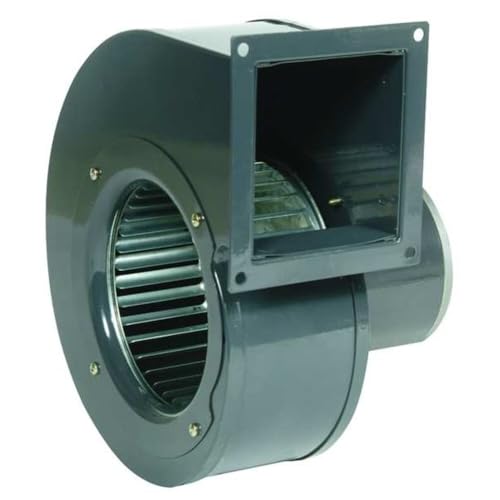
How to Measure or Establish Your Motor Frame Size
The motor frame size is a physical measurement of the motor’s exterior dimensions, not a measure of its power output or RPM. You establish your required value by measuring the distance between the mounting holes on your baseplate or the diameter of the drive shaft. If you are replacing an existing unit, you must identify the specific NEMA or IEC designation printed on the motor’s nameplate.
Quiet operation is essential in many settings, so view the best centrifugal blower for low noise exhaust.
Locating the Frame Size on a Motor Nameplate
The motor frame size is usually located on a metal identification plate riveted to the side of the motor housing. Look for a designation such as “NEMA 184C” or “IEC 132S” printed near the electrical specifications. If the nameplate is missing or illegible, you must measure the distance between the mounting holes and the total height of the motor body to find the corresponding standard in a manufacturer’s chart.
Compact installations require specific dimensions, so find the best centrifugal fan for small spaces.
Distinguishing Between NEMA and IEC Standards
NEMA and IEC are the two primary standards for motor frame sizes, and they are not interchangeable. NEMA (National Electrical Manufacturers Association) is common in North America, while IEC (International Electrotechnical Commission) is the standard for most other global markets. A NEMA 184 frame will have different mounting hole patterns and shaft dimensions than an IEC 132 frame, even if they produce similar horsepower.
For basement safety, compare the best centrifugal fan for radon mitigation.
What Happens if You Choose the Wrong Motor Frame Size
Choosing a motor frame size that is too small for the required torque leads to rapid bearing failure or motor burnout. When a blower requires more torque than a small frame can provide, the internal components experience excessive heat and friction. This often results in the motor seizing or the internal windings melting, which can cause a complete system shutdown and require a full motor replacement.
Ensure proper airflow by learning how to select the correct inlet and outlet diameter for blowers.
Understanding the underlying mechanics helps, so see the different types of centrifugal blowers.
Oversized motor frames cause installation failures and extra costs
A motor frame size that is too large for the application creates physical installation failures and unnecessary costs. If the frame is too large, the mounting bolt holes will not align with your existing machinery or housing. This forces you to either fabricate a custom mounting bracket or replace the entire machine base, both of which increase the cost and time of the installation.
Beginners can learn the basics by reading how a centrifugal blower works.
What to Do When Your Requirements Fall Between Two Frame Sizes
When your requirements fall between two frame sizes, you must select the larger frame size. Choosing the larger frame ensures the motor has the structural integrity and bearing surface area to handle the load safely. While a larger frame might be slightly more expensive, it provides a safety margin that prevents the mechanical failures associated with undersized motors.
For a deeper look at that specific unit, see our full Hurricane Inline Fan review.
Matching centrifugal blower torque requirements to standard frame sizes
If you are unsure which direction to go, check the maximum torque requirements of your centrifugal blower. If your required torque is within 90% of the lower frame’s capacity, you can use the smaller size to save space. If your requirements exceed 90% of that capacity, you must move to the next larger standard frame size to ensure long-term reliability.
You can find detailed performance data in our full Fasco 50756-D500 review.
Practical Application of Frame Size Selection
A blower fails to start because the motor housing is too small for the required drive shaft. For example, if you are installing a centrifugal blower to move air through a 4-inch industrial duct, the motor must have a frame large enough to support the shaft’s diameter and the vibration of the impeller. If the motor is undersized, the shaft may flex, leading to a misalignment that creates excessive noise and heat.
Detailed specifications are available in our full D2E133-AM47-94 Blower review.
Verifying mounting bolt distances against NEMA and IEC specifications
To ensure a correct fit, check the distance between your mounting bolts. If your measurement is 12 inches, you must confirm that the motor’s official NEMA or IEC specifications list that exact dimension for its frame size. If the measurement does not match a standard frame exactly, you may need a custom mounting plate to bridge the gap between your machine and a standard motor size.
A complete data breakdown is available in our full Dayton 1TDR7 review.
Where to go next in our centrifugal blower coverage
- Best Centrifugal Blowers for Laboratory Fume Hood Ventilation
- Radon Mitigation Centrifugal Fans Compared
- Choosing the Best Centrifugal Blower for Medicine Cabinets
- The Centrifugal Fans That Work Best for 4 Inch Ductwork
- Which Centrifugal Blower Is Best for Low Noise Exhaust?
- Best Centrifugal Fans for Small Spaces