
Refrigerant Recovery Pro is reader-supported: some links on this page are affiliate links, and as an Amazon Associate Refrigerant Recovery Pro earns from qualifying purchases at no extra cost to you. Learn more.
Certifications and safety standards for centrifugal blowers include mandatory electrical safety marks, voluntary industrial performance certifications, and decorative manufacturer labels. You need a certified blower if your local electrical code requires it or if you operate in an environment where specific airflow accuracy is a safety requirement. Measure the total voltage and phase requirements of your power source to determine which regional electrical certification your blower must possess.
If you are designing a laboratory, see the best centrifugal blower for laboratory fume hood ventilation to ensure proper air exchange.
What do UL and CSA marks mean for a centrifugal blower?
UL (Underwriters Laboratories) and CSA (Canadian Standards Association) marks are safety certifications that guarantee the electrical components of a centrifugal blower meet specific fire and shock hazards standards. These marks ensure the motor housing, wiring, and internal insulation are rated for the specific voltage and amperage the unit will draw during operation. These certifications do not guarantee the mechanical performance of the blower, such as the actual cubic feet per minute (CFM) or the static pressure the unit can produce. They only confirm that the electrical system is unlikely to cause a fire or electrical arc under normal load conditions.
For medical storage solutions, consult our guide to the best centrifugal blower for medicine cabinets.
UL and CSA marks confirm blower wiring safety for specific voltages
In a commercial kitchen, a blower used to exhaust grease-laden air must have these safety marks to pass fire marshal inspections. If the blower is connected to a 240V circuit, the UL or CSA mark confirms the internal wiring can handle that specific load without overheating. Does the blower have a UL listing for the specific voltage you plan to use? Most industrial blowers are listed for 208-230V, but a mismatch can lead to immediate component failure or a fire hazard.
Compact setups can benefit from the best centrifugal fan for small spaces to maintain proper circulation.
Where these choices show up in our reviews
From $115.45 to $186: 3 of the 8 in this category we have reviewed in full.
Budget-conscious projects can find a high-performing centrifugal blower under $300 in our curated list.
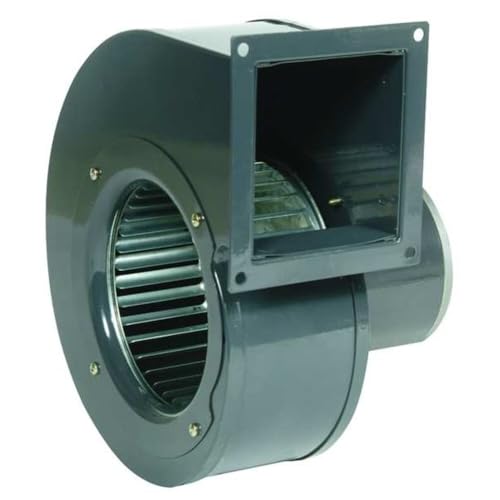
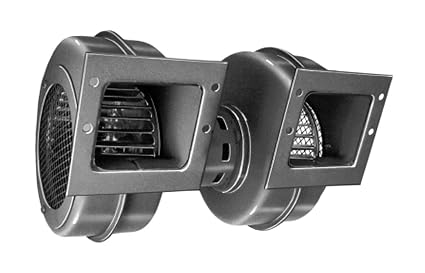
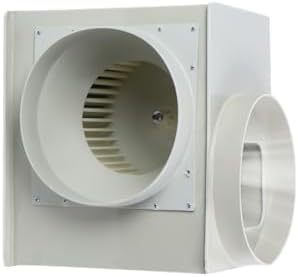
How do NEMA and IEC standards affect blower compatibility?
NEMA (National Electrical Manufacturers Association) and IEC (International Electrotechnical Commission) standards define the physical dimensions, mounting footprints, and electrical configurations of the blower motor. NEMA standards are primarily used in North America, while IEC standards are the global standard for motor construction. These standards ensure that a blower’s mounting face will match the standard frame sizes used by industrial contractors and that the terminal box is positioned correctly for wiring. These standards do not measure the blower’s airflow capacity or its rotational speed.
Homeowners concerned about soil gases should find the best centrifugal fan for radon mitigation for effective extraction.
NEMA and IEC frame sizes ensure blower compatibility with mounting plates
A blower with a NEMA frame size allows a technician to swap out a burnt motor with a standard replacement from any major manufacturer. If you are designing a permanent installation, confirming the NEMA or IEC frame size ensures the blower fits into the pre-drilled mounting holes of your ductwork. A mistake in choosing the wrong standard can result in a blower that is physically impossible to bolt onto the existing mounting plate, requiring expensive modifications to the structural supports.
You can determine the correct sizing by learning how to choose inlet and outlet diameters for centrifugal blowers.
What does AMCA certification guarantee for airflow?
AMCA (Air Movement and Control Association) certification is a voluntary performance standard that verifies the airflow and static pressure ratings of a centrifugal blower. The AMCA mark means the manufacturer has submitted the unit to a third-party laboratory to prove that the stated cubic feet per minute (CFM) and inches of water gauge (w.g.) are accurate under specific conditions. This certification does not guarantee the blower’s lifespan or the quality of its materials, such as the grade of stainless steel or the type of bearings used. It only guarantees that the performance data on the nameplate is truthful.
Understanding the mechanics is simpler when you view the different types of centrifugal blowers explained.
AMCA certification verifies blower air flow performance for legal compliance
AMCA certification is vital when a project requires precise air balancing, such as in a hospital ventilation system where specific air exchange rates are required by law. Without this mark, the blower’s performance figures are merely the manufacturer’s claims and may vary significantly from reality. If a blower is rated for 2,000 CFM but lacks AMCA certification, the actual output could be 15% lower depending on the internal blade geometry. This discrepancy can cause a ventilation system to fail to meet required air change rates, leading to a failed inspection or poor air quality.
If a blower isn’t suitable, consider exploring the alternatives to a centrifugal blower for your needs.
Which safety standards address centrifugal blower failure modes?
Static pressure mismatch and bearing seizure are the primary safety failure modes for centrifugal blowers, and specific standards address each. Static pressure mismatch occurs when a blower is forced to move air through a restriction it is not rated for, which can lead to motor overheating and internal component melting. This is addressed by the AMCA certification, which defines the maximum static pressure a blower can handle before performance drops. Bearing seizure occurs when a blower is operated outside its rated duty cycle or in environments exceeding its IP rating, which can cause the impeller to lock and the motor to burn out.
Protect your investment by reviewing what to check in centrifugal blower warranties before purchasing.
IP ratings protect blower motors from moisture and dust damage
The IP (Ingress Protection) rating addresses the risk of moisture or dust entering the motor housing and causing a short circuit. For example, a blower used in a wash-down area needs a high IP rating to prevent water from entering the electrical compartment. If a blower lacks a high enough IP rating for its environment, the motor can fail within hours of operation. The cost of this failure includes the price of a new motor and the downtime of the ventilation system it serves.
Detailed technical specifications are available in our full Fasco B24220 review.
How can a buyer verify a certification mark is real?
Verifying a certification mark involves checking the physical label against the manufacturer’s documentation to ensure it is not a counterfeit or expired mark. A printed logo on a box is not a guarantee of compliance; the mark must be associated with a specific model number and a valid certification number. Follow these steps to verify the authenticity of a blower’s safety and performance marks:
For heavy-duty inline needs, see the Fasco Hurricane Inline Fan spec breakdown.
- Locate the manufacturer’s nameplate on the blower housing, not the shipping carton.
- Identify the specific certification number (e.g., a UL file number) printed on the nameplate.
- Visit the official website of the certifying body (such as UL or AMCA) and search for the manufacturer’s name and the specific model number.
- Confirm that the listed specifications on the certification database match the values printed on the blower’s nameplate.
- Check the date of the last inspection or the expiration date if the certification is time-limited.
Which marks are non-negotiable for centrifugal blowers?
The non-negotiable marks for a centrifugal blower are the local electrical safety certifications, such as UL or CSA, and the IP rating for the intended environment. These marks are legal requirements for most commercial and industrial installations and are necessary to ensure the safety of the building’s occupants and the equipment. While AMCA certification is highly recommended for performance accuracy, it is often a secondary concern compared to basic electrical safety. You should prioritize a blower that carries the required electrical safety marks for your region’s voltage and phase requirements.
Detailed performance data is available in our full Fasco 50756-D500 review.
Verifying IP and AMCA ratings ensures blower suitability for specific applications
If you are installing a blower in a high-moisture environment, the IP rating is a non-negotiable factor that must be verified before purchase. A blower with an IP55 rating is suitable for general outdoor use, but a wash-down area may require an IP66 rating. If the IP rating is insufficient, the motor will eventually fail due to water ingress. Conversely, if you are performing a precision air-balance project, the AMCA certification becomes a critical requirement to ensure the system performs as designed. Always verify that the specific model you select carries the necessary marks for your specific application before placing an order.
Research the motor performance in our full D2E133-AM47-94 Blower review.