
Refrigerant Recovery Pro is reader-supported: some links on this page are affiliate links, and as an Amazon Associate Refrigerant Recovery Pro earns from qualifying purchases at no extra cost to you. Learn more.
Centrifugal blowers move air by using a rotating impeller to create high-pressure airflow for industrial ventilation and material handling. You need a centrifugal blower when your system requires moving air through restrictive ductwork, long runs, or heavy-duty filtration where standard fans fail to maintain necessary pressure. You should first measure the total static pressure of your system in inches of water gauge (w.g.) to determine the required blower capacity.
How do axial fans compare to centrifugal blowers?
Axial fans move air parallel to the shaft of the impeller, creating a straight-through flow pattern. This design is efficient for moving large volumes of air at low pressure, such as in large-scale warehouse ventilation or cooling large surface areas. Because they do not have the spiral housing of a centrifugal unit, axial fans are often more compact and easier to mount directly in a duct line. However, axial fans lose efficiency rapidly as resistance increases.
Beginners should start by reading how a centrifugal blower works and what it is.
Why centrifugal blowers outperform axial fans in high-resistance ducting
If your application involves moving air through a 10-foot run of flexible ducting, an axial fan may struggle to maintain the required velocity. The pressure drop caused by the friction of the duct walls can exceed the axial fan’s capabilities, leading to stagnant air at the discharge point. In these cases, the centrifugal blower is the correct choice because its housing allows it to build the necessary static head. You should choose an axial fan only when the path of the air is relatively unobstructed and the volume requirement is high but the pressure requirement is low.
Where these choices show up in our reviews
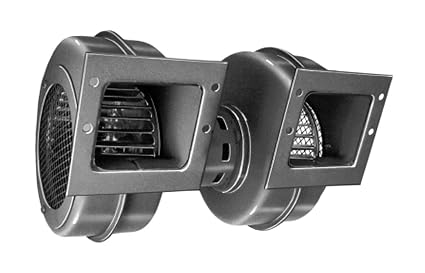
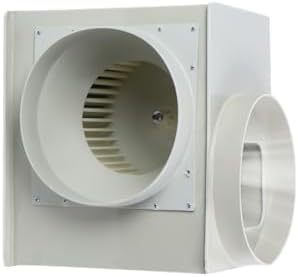
3 options shown here, $146.33 to $463.21, each with its own full review behind its name.
Selecting the right flow requires knowing the inlet and outlet diameter for centrifugal blowers.

When should you use an inline blower instead?
Inline blowers are designed to be installed directly within a duct system, often mimicking the centrifugal design but in a more compact, streamlined housing. They provide a middle ground between the high-volume/low-pressure capability of axial fans and the high-pressure capabilities of larger centrifugal blowers. These units are frequently used in commercial HVAC systems where space is at a premium and the blower must be hidden inside a ceiling plenum or a wall cavity.
How compact inline blowers compare to standard centrifugal units
The cost of an inline blower is typically higher per unit of airflow than a standard centrifugal blower due to the specialized housing and integrated mounting. They beat a standard centrifugal blower when the installation footprint is the primary constraint. However, they stop making sense when the required static pressure exceeds the limits of the compact housing design. If your system requires moving air through a heavy-duty industrial filter or a long, multi-bend duct run, the inline blower may lack the power to overcome the resistance, necessitating a larger centrifugal unit.
For a deep dive into that specific unit, see our full Dayton 1TDR7 review.
What are the benefits of buying refurbished blowers?
Refurbished blowers are used industrial units that have been inspected, cleaned, and repaired to meet specific operational standards. This route is often the most cost-effective way to acquire heavy-duty equipment, especially for industrial-scale centrifugal blowers that are expensive to purchase new. Because these units are often sourced from decommissioned factories or warehouses, they may have fewer total hours of operation than a standard “used” listing suggests.
If you need a specialized kit, view our full Radon Fan Kit review.
Risks and benefits of buying refurbished centrifugal blowers
Buying refurbished is a viable path when your project has a strict budget but requires the durability of a professional-grade motor and impeller. It beats buying new when the specific model is no longer in production or when the initial capital outlay for a new unit is prohibitive. The risk occurs when the refurbishment process does not include a full bearing replacement or a motor rewind. If the blower is used in a high-moisture or corrosive environment, a refurbished unit may have hidden internal degradation that a visual inspection cannot detect, making a new unit a safer investment for critical infrastructure.
Is renting a centrifugal blower a better option?
Renting a centrifugal blower provides access to high-capacity equipment for a specific duration without the long-term costs of ownership, maintenance, or storage. This is a common route for construction sites, temporary industrial setups, or short-term dust extraction projects. Rental companies often provide heavy-duty units that are much larger than what a typical owner would keep on-site, allowing for higher airflow capacities that are only needed for a few weeks.
High-performance requirements are covered in our full Fasco B47120 review.
When renting a blower is more cost-effective than buying
Renting is more cost-effective than buying when the total project duration is less than six months or when the cost of the blower exceeds the cost of a monthly rental fee. It beats buying when you need a specific high-pressure model that you would rarely use again. The point at which renting stops making sense is when the machine becomes a permanent fixture of your facility. If you need to move air every day for three years, the cumulative rental fees will quickly exceed the purchase price of a new unit, and the lack of ownership means you cannot customize the mounting or power configuration to your specific needs.
Comparison of axial fans inline blowers and refurbished units
| Route | Who it suits | Main advantage | Where it breaks down |
|---|---|---|---|
| Axial Fan | Low-pressure ventilation | High volume flow | High-resistance ducting |
| Inline Blower | Space-constrained HVAC | Compact installation | Extreme static pressure |
| Refurbished | Budget-conscious projects | Lower capital cost | Unknown wear on internals |
| Renting | Short-term construction | No ownership costs | Long-term usage costs |
When is buying a centrifugal blower the right answer?
Buying a centrifugal blower is the correct decision when the application requires a permanent, high-pressure solution with a predictable duty cycle. If your operation requires moving air through a series of industrial filters or a long run of piping, the centrifugal design is the standard because it handles static pressure more effectively than axial alternatives. You should choose to buy when the equipment will be used consistently enough that the initial cost is amortized over a long period of time.
Detailed specifications are available in our full Fasco B24220 review.
Why buying a new centrifugal blower suits permanent manufacturing lines
A centrifugal blower is also the right choice when you need a specific motor rating or a custom inlet/outlet diameter that is not available in standard rental fleets. When the blower is a core component of a permanent manufacturing line or a permanent HVAC system, the reliability of a new unit with a clear warranty outweighs the savings of a refurbished or rented option. If your system requires a specific RPM to maintain noise levels below a certain threshold, buying allows you to select the exact motor and housing combination to meet those requirements.
More centrifugal blower explainers and comparisons
- The Centrifugal Fans That Work Best for 4 Inch Ductwork
- Which Centrifugal Blower Is Best for Low Noise Exhaust?
- Best Centrifugal Fans for Small Spaces
- Home Ventilation Centrifugal Blowers Compared
- Choosing the Best Centrifugal Blower Under $300
- Best Centrifugal Blowers for Laboratory Fume Hood Ventilation