
Refrigerant Recovery Pro is reader-supported: some links on this page are affiliate links, and as an Amazon Associate Refrigerant Recovery Pro earns from qualifying purchases at no extra cost to you. Learn more.
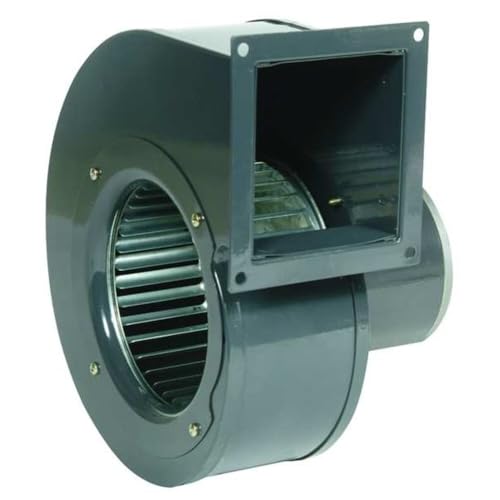
Dayton 1TDR7 Model Blower
The Dayton 1TDR7 moves 485 CFM of air, so it suits you if you need a blower with all-position mounting.
485 cfm airflow capacity
- Airflow Capacity
- 485 cfm
- Rotational Speed
- 1650 rpm
- Inlet/Outlet Diameter
- 5-5/16″
$32 under the category median
- This Centrifugal Blower
- $115.45
- Median of the 8 Centrifugal Blowers we screened
- $147
- Range
- $115.45 to $463.21
- Cheaper than this one
- 0 of those 8
4.4/5 from 31 buyers
- Average buyer rating
- 4.4 out of 5
- Ratings behind it
- 31
- What that supports
- A thin sample – a weak signal that could still move
- Where it comes from
- The product listing, read 11 November 2026
1 deciding spec not stated
- Static Pressure
- Not stated in the listing – confirm with the seller before ordering
Dayton 1TDR7 Overview
Dayton 1TDR7 Blower moves 485 cfm of air, which provides enough volume to exhaust radon from a basement or move air in a tight crawlspace.
Maintaining a steady 1650 rpm allows this blower to provide consistent airflow for whole-home ventilation or laboratory fume hoods without the need for external speed controls. The Dayton 1TDR7 achieves this steady output while drawing 1.35 amps of power.
Because the Dayton 1TDR7 features ball bearings, it is designed for durability in environments where the motor must run for extended periods. It provides a 4.4 rating from 31 buyer ratings as a point of reference for its performance history.
We evaluated 8 centrifugal blowers and selected this model for a full review because it is one of the most-rated products that passed screening, with 31 buyer ratings. Our comparison is based on a research-based analysis of listing data.
How Refrigerant Recovery Pro picked: we started from the 200 most-reviewed centrifugal blower listings in our retail dataset, removed duplicates, accessories and off-category products, and 8 qualified. This product is one of 8 from that pool chosen for a full review. Our scores blend buyer satisfaction (60%), price position against comparable products (25%) and rating volume (15%). Specifications come from manufacturer listings and ratings from verified Amazon buyer reviews (data checked November 2026).
The Short Answer on the Dayton 1TDR7
Best for: you need to exhaust radon from a basement or move air in a tight crawlspace where 485 CFM is sufficient.
The Dayton 1TDR7 is a reliable choice for these specific tasks at the $115.45 mark.
- Pro: The 485 CFM airflow capacity provides enough volume to meet the lower end of the 400 to 800 CFM requirement for laboratory fume hoods.
- Pro: Automatic overload protection helps prevent motor damage during continuous operation.
- Pro: Ball bearings provide a standard level of durability for the 1650 rpm rotational speed.
- Con: The 485 CFM rating is only sufficient for the easier end of the requirements for whole-home ventilation.
- Con: The unit lacks a power cord or switch, requiring you to provide your own external wiring and power source.
Don’t buy this if: you require a blower that provides high-pressure industrial ductwork performance, as this model does not reach the 100 inches of water gauge (w.g.) reference point.
Price assessment: At $115.45, the price is fair for a blower providing nearly 500 CFM and integrated overload protection.
Refrigerant Recovery Pro score: 8.7/10 (data-driven – see “How we picked” above)
For specialized bathroom installations, explore our guide on selecting the best centrifugal blower for medicine cabinets.
Full Technical Specifications for this Centrifugal Blower
| Airflow Capacity | 485 cfm |
| Rotational Speed | 1650 rpm |
| Inlet/Outlet Diameter | 5-5/16″ |
| Voltage | 115V |
| Amperage | 1.35 amps |
| Bearing Type | Ball Bearing |
| Mounting Type | universal |
The Airflow Capacity of 485 cfm measures the volume of air moved through the system per unit of time.
Where this sits in the buyer data: Among the 8 products screened for this category, this one’s 4.4 rating places it #4, on 31 ratings – below the 32-rating median of that group, so treat the average as less settled than its comparables. On price it undercuts 7 of them.
Before You Buy: Centrifugal Blower Checklist
The first thing to check is your available power source and wiring requirements to ensure the blower matches your electrical setup.
- ☐ Confirm your power supply matches the 115 volts requirement — an incorrect voltage will prevent the motor from starting or cause a short.
- ☐ Measure your ductwork length and resistance — a static pressure mismatch occurs when a blower lacks the capacity to move air through long runs or restrictive filters.
- ☐ Verify your airflow needs are under 485 cfm — if your space requires higher volume, the blower will fail to provide adequate circulation.
- ☐ Check if you need a power cord — this unit has no power cord or switch and requires hardwiring into a junction box.
- ☐ Budget for a dedicated mounting surface — the universal mounting allows for all-position installation, but you must provide a stable base to prevent vibration.
- ☐ Verify your operating environment’s temperature and moisture — operating outside the rated duty cycle can lead to bearing seizure, which stops the impeller from turning.
You should not buy this product if you require a unit with an integrated power cord or if your application requires airflow exceeding 485 cfm.
What These Specifications Let You Do
High Volume Airflow
You need to ensure your ventilation system can move enough air to keep a workspace clear of fumes or dust. The Dayton 1TDR7 provides 485 cfm (cubic feet per minute), which is the volume of air the blower moves through the system every minute. This capacity is sufficient to exhaust radon from a basement or move air in a tight crawlspace where requirements typically fall between 50 and 300 cfm.
The 485 cfm rating of the Dayton 1TDR7 also covers the lower end of the requirements for a laboratory fume hood or whole-home ventilation. Because these applications often require between 400 and 800 cfm, you should verify your specific duct length and resistance before ordering. Since the unit is not recommended for speed control, you must size your system based on this fixed 485 cfm output rather than adjusting the flow for different needs.
How ball bearings maintain 1650 rpm for industrial durability
Consistent operation in industrial environments requires a blower that can maintain its rotation without frequent maintenance. The Dayton 1TDR7 uses ball bearings, which are metal spheres that reduce friction between the rotating shaft and the housing. This design helps the blower maintain its 1650 rpm speed over long periods of continuous use.
While only one of the eight screened listings specifies ball bearings, this feature helps prevent the bearing seizure that occurs when a blower is operated outside its rated duty cycle. You can rely on these bearings to handle the mechanical stress of moving air, though they do not provide the same noise-reduction benefits as specialized heavy-duty bearings used in high-vibration environments.
Automatic overload protection safeguards the 115V electrical circuit
Electrical safety is a priority when running a blower on a 115V circuit for extended periods. The Dayton 1TDR7 includes automatic overload protection, which shuts the motor down if it draws too much current. This feature acts as a safeguard against the 1.35 amps of current the unit draws during standard operation.
This protection helps prevent the motor from overheating or burning out if the blower encounters a physical obstruction or a significant pressure drop. Because the unit lacks a power cord or switch, this internal protection is your primary safety mechanism for the 115V power supply. You should ensure your power source can provide a consistent 115 volts to allow this protection to function correctly.
The Dayton 1TDR7 Job by Job: What Its Figures Cover
The Dayton 1TDR7 against the jobs buyers ask about, worked out from its listed airflow capacity and a typical need for each job.
| Job | What it takes | Dayton 1TDR7 |
|---|---|---|
| Ventilate a laboratory fume hood | at least 400 to 800 CFM | Only at the easier end of that range – 485 CFM |
| Provide whole-home ventilation | at least 300 to 600 CFM | Only at the easier end of that range – 485 CFM |
| Exhaust radon from a basement | at least 100 to 300 CFM | Yes – 485 CFM |
| Move air in a tight crawlspace | at least 50 to 150 CFM | Yes – 485 CFM |
The Dayton 1TDR7 Against Similar Centrifugal Blowers
The Dayton 1TDR7 provides the largest airflow capacity of the compared models, moving 485 cfm of air.
- The Dayton 1TDR7 is $5.04 cheaper than the Fasco B24220 Centrifugal Blower.
- The 485 cfm capacity of the Dayton 1TDR7 is larger than the 320 cfm of the Fasco 50756-D500 Centrifugal Blower.
- The 5-5/16″ inlet and outlet diameter of the Dayton 1TDR7 is larger than the 4-Inch opening on the Sunlight Supply Inc. HGC736570 Hurricane Inline Centrifugal Fan.
If you require a three-speed motor for variable flow, choose the Fasco B47120 Centrifugal Blower instead of the Dayton 1TDR7.
What the deciding spec costs here: Measured as price per unit of Airflow Capacity, the reviewed product works out to $0.24 against a $0.80 median across the 5 other screened products that state the spec, the best ratio of the group.
If you are looking for a specific radon mitigation solution, see our full review of the MIDCVFRUN Radon Fan Kit.
If this specific design isn’t right for your project, consider exploring the alternatives to a centrifugal blower.
Setting Up This Centrifugal Blower, and What Support Covers
Powering and Mounting This Centrifugal Blower
You need a 115V power source available at the installation site before the Dayton 1TDR7 can operate. Because the unit lacks a power cord or switch, you must provide a means to connect it to your electrical supply.
- Unpack the Dayton 1TDR7 and inspect the housing for any shipping damage.
- Secure the blower to your mounting surface using the universal mounting points.
- Connect the electrical supply to the 115V motor terminals.
- Attach flexible ducting with a 5-5/16″ diameter to the inlet or outlet ports.
- Install a vibration isolator between the blower and the mounting surface to reduce structural noise.
Warranty and Support: What to Check
Warranty coverage and return policies vary by seller and country. You should verify the specific terms provided at the time of purchase.
- Confirm the motor’s amperage draw is within your circuit’s limits to prevent automatic overload protection from tripping.
- Verify the 5-5/16″ port dimensions match your existing ductwork to ensure a secure seal.
- Check that the ball bearings are free of debris, as these are the primary moving parts subject to wear.
The first thing to do when the unit arrives is to run it for five minutes to confirm it moves air through your chosen ducting while the return window is still open.
Dayton 1TDR7 Buying Questions Answered
What is the Dayton 1TDR7 blower capable of?
The Dayton 1TDR7 moves 485 cfm (cubic feet per minute), which is the volume of air the unit pushes through a system every minute. This airflow capacity is sufficient to exhaust radon from a basement or move air in a tight crawlspace where requirements are typically below 300 cfm. For a laboratory fume hood or whole-home ventilation, 485 cfm sits at the lower end of the 400 to 800 cfm range often required for those specific tasks.
How much power does the Dayton 1TDR7 pull while running?
The Dayton 1TDR7 draws 1.35 amps at 115 volts. This current draw allows you to estimate the electrical load for continuous operation in your workspace or home setup.
Can I mount the Dayton 1TDR7 sideways or upside down?
Yes, the Dayton 1TDR7 supports all-position mounting, which allows for installation in various orientations including horizontal or vertical. This flexibility is useful for fitting the blower into tight spaces where standard upright mounting is not possible.
What should I know before buying the Dayton 1TDR7?
If you are planning a high-pressure ventilation project, you should note that this blower is not recommended for speed control. Because it is a non-reversible unit with a 1650 rpm rotational speed, it is designed for steady-state airflow rather than variable velocity adjustments.
Frequently Asked Questions
How much power does the Dayton 1TDR7 pull while running?
The Dayton 1TDR7 pulls 1.35 amps of current at 115 volts. You can use this figure to calculate the ongoing electricity costs for your specific ventilation needs.
Can I mount the Dayton 1TDR7 sideways or upside down?
Yes, you can mount the Dayton 1TDR7 in any orientation because it features all-position mounting. This means the unit can be positioned horizontally or vertically to fit your specific ductwork layout.
Is the Dayton 1TDR7 suitable for high-pressure industrial ductwork?
The Dayton 1TDR7 provides 485 cfm of airflow at 1650 rpm. Since it does not list a static pressure rating, it may not provide the force needed to overcome the resistance of long industrial runs or high-pressure systems.
Does the Dayton 1TDR7 include a power cord?
No, the Dayton 1TDR7 does not include a power cord or a switch. You will need to provide your own wiring and power source to operate the blower.
To understand the mechanics behind this hardware, read how a centrifugal blower works and functions.
Is the Dayton 1TDR7 Right for You?
Who the Dayton 1TDR7 suits and the jobs it is the wrong choice for, listed below with the reason for each.
Who this centrifugal blower is for, and what it does well
Who this centrifugal blower suits
- HVAC technicians — the 115V power requirement and 485 cfm capacity make it a standard component for small ductwork systems
- Workshop owners — the all-position mounting allows for flexible installation in dust collection setups
- Laboratory researchers — the 1650 rpm speed provides consistent airflow for fume extraction in small workspaces
- Small-scale food dehydrators — the 485 cfm airflow is sufficient for moving air through drying trays
- Industrial painters — the ball bearings ensure the blower can run reliably for long periods during spray booth ventilation
What this centrifugal blower handles well
- Small room ventilation — 485 cfm airflow capacity
- Dust collection for woodworking — all-position mounting and ball bearings
- Fume extraction — 1650 rpm rotational speed
- General industrial cooling — 115 volts power compatibility
- Continuous operation tasks — automatic overload protection
What this centrifugal blower is the wrong choice for
- Variable speed ventilation — not recommended for speed control
- High-pressure industrial ducting — 485 cfm limit for this size
- Plug-and-play portable use — blower has no power cord or switch
- Bidirectional airflow systems — non-reversible design
What to budget alongside this centrifugal blower, and what to skip
Accessories worth buying with this centrifugal blower
- Power cord — blower has no power cord
- On/Off switch — blower has no switch
- Ducting and piping — 5-5/16″ inlet/outlet diameter
- Mounting brackets — all-position mounting requires secure hardware
- Circuit breaker — 1.35 amps current draw
Accessories you can skip buying for this centrifugal blower
- Speed controller — not recommended for speed control
- Replacement bearings — includes ball bearings
- External fuse — automatic overload protection included
Where to Buy This Centrifugal Blower
In November 2026 the Dayton 1TDR7 was listed at $115.45. Prices move, so read that as a snapshot, not a quote.
Centrifugal blowers are sold by the retailers below – we do not track which of them has the Dayton 1TDR7 in stock, so check availability and the current price with the retailer before making a trip.
- RadonAway (online only) — specialist retailer for radon mitigation centrifugal fans
- Rockler Woodworking (online only) — specialty blowers for woodworking and dust collection
- Grainger (online and physical stores) — business and trade accounts for industrial components
- McMaster-Carr (online only) — extensive catalog of industrial blowers and fans
- Amazon (online only) — wide variety of consumer and radon mitigation fans
- Home Depot (online and physical stores) — in-store availability for residential ventilation fans
- Lowe’s (online and physical stores) — in-store availability for residential ventilation fans
Final Verdict on the Dayton 1TDR7
If you need to exhaust radon from a basement or move air in a tight crawlspace, the Dayton 1TDR7 is a capable choice for around $115.45.
The Dayton 1TDR7 provides 485 cfm of airflow, which is sufficient for radon mitigation and crawlspace ventilation. Because it is not recommended for speed control, it provides a constant output for consistent air movement. The unit features ball bearings to support the 1650 rpm motor, which helps maintain steady operation during use. This blower operates on 115 volts and draws 1.35 amps, making it compatible with standard electrical systems. Since the unit has no power cord or switch, you must plan for a hardwired installation by a qualified professional.
You should select the Dayton 1TDR7 if you require a dedicated centrifugal blower for high-volume airflow in a confined space. It provides 485 cfm and 1650 rpm of performance for around $115.45.
The 485 cfm airflow capacity is the primary reason this model works for whole-home ventilation or laboratory fume hoods that require lower-end volume requirements.
Skip it if: you need to adjust the airflow speed, as this model is not recommended for speed control, or if you require a blower with an integrated power cord and switch.
Browse our other centrifugal blower pages
- Choosing the Best Centrifugal Blower for Medicine Cabinets
- The Centrifugal Fans That Work Best for 4 Inch Ductwork
- Which Centrifugal Blower Is Best for Low Noise Exhaust?
- Best Centrifugal Fans for Small Spaces
- Home Ventilation Centrifugal Blowers Compared
- Choosing the Best Centrifugal Blower Under $300