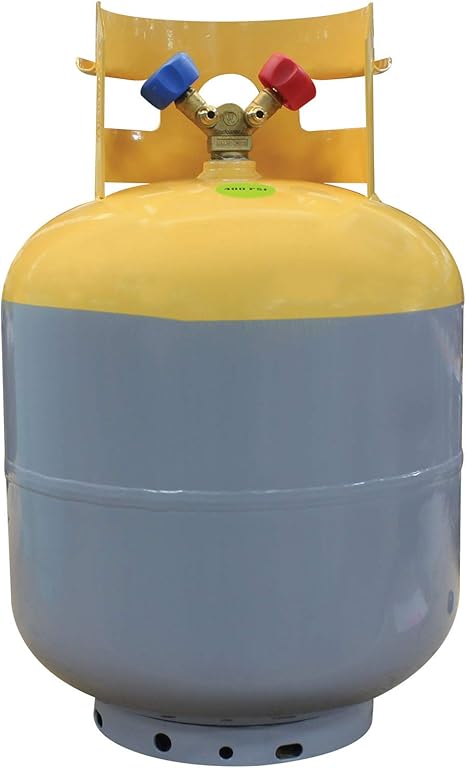
MASTERCOOL 63010 Gray/Yellow Refrigerant Recovery Tank – 50 lb. Capacity
Category: Refrigerant Recovery
Check Current PriceYes MASTERCOOL 63010 Gray/Yellow Refrigerant Recovery Tank offers top mobile performance. It ships pre-charged, meets DOT-4BA400, and includes a Y-valve. This review focuses on Refrigerant Recovery gear for mobile HVAC technicians.
MASTERCOOL 63010 features for mobile HVAC technicians
MASTERCOOL 63010 provides durable, service-ready features for Refrigerant Recovery on mobile jobs. The 50 lb capacity and powder-coated finish reduce trip frequency and resist jobsite damage. Technicians gain cleanliness from the pre-charged interior and UL-listed valve components. That combination speeds transfers and lowers contamination risk during routine recoveries.
Technical specifications and certifications useful for field work
- Capacity: 50 lb
- Valve type: Y-valve (liquid/vapor)
- Openings: 3/4 NPT (accepts 80-fill float switch shutoff)
- Air purge: 1/4 inch valve
- Thread spec: 1/4 FL-M 7/16-20
- Float switch included: no (sold without float)
- Pre-charged interior: yes (clean, dry interior)
- Finish: powder-coated, high-gloss
- Approvals: DOT-4BA400, ARI conformity, UL listed valve components, AUS and TC approvals
- Origin and price: Made in United States; list price about $144.90
How does cylinder design affect portability for field use?
MASTERCOOL Refrigerant Recovery Tank improves portability with its collar handle and balanced 50 lb form. The collar handle gives a secure grip for lifting into service vans and truck beds. Compared to 100 lb cylinders, the reduced size eases one-person loading and frees space for tools. Technicians should still use a small dolly for long walks or stair carries to avoid strain.
Choosing compact refrigerant tanks for long mobile service calls
63010 Refrigerant Recovery Tank fits the compact category for long calls needing moderate refrigerant capacity. A 50 lb vessel often replaces multiple small cans and lowers refill trips on rural routes. Choose tanks by capacity, float-switch compatibility, valve type, and the DOT approvals they carry. Budget-conscious buyers compare price-per-pound and brand reliability between MASTERCOOL, Robinair, and Yellow Jacket.
Inspection and preparation checklist for long mobile service calls
- Confirm float-switch compatibility: 3/4 NPT fitting for automatic shutoff devices
- Verify pre-charge and interior dryness before first use
- Label tanks clearly with refrigerant type and technician contact
- Pack a hand truck or cylinder dolly for transports over 20 feet
- Bring spare recovery hoses, manifold gauges, and an oil trap for cross-contamination control
- Keep valve seal kits and leak detection spray on the truck
- Log recovered weights and retain receipts for regulatory recordkeeping
Which regular maintenance steps prolong tank service life?
63010 extends service life when technicians perform regular inspections and dry purging. Inspect valve threads, purge ports, and the powder-coat finish before each job to spot corrosion or damage early. Perform a dry nitrogen purge after draining to remove moisture and prevent oil or acid formation that damages interiors. Keep service records and replace worn seals promptly to stay compliant with DOT and ARI guidance.
MASTERCOOL 63010 compatibility with R134a, R410A, R1234yf
50 lb. refrigerant recovery tank (gray/yellow) can physically store R134a, R410A, and R1234yf recoveries. The DOT-4BA400 designation and ARI conformity indicate the cylinder meets basic transport and pressure standards for recovered refrigerants. manufacturer-specific compatibility lists are not provided, so technicians must follow refrigerant-specific handling rules and reclaimer instructions. For mildly flammable A2L refrigerants such as R1234yf, follow local flammable-gas protocols and ASHRAE safety guidance when storing and transporting recovered refrigerant.
Can I use one recovery tank for multiple refrigerant types?
this 50 lb. refrigerant recovery tank discourages mixing, causing contamination and illegal blends. Mixing R134a, R410A, and R1234yf in one cylinder ruins purity and often prevents successful reclaim or resale. Best practice uses dedicated, clearly labeled cylinders per refrigerant and purges with dry nitrogen between uses to minimize cross-contamination. For R410A pressure, use DOT-rated cylinders and monitor with high-side pressure gauges. For R1234yf, follow A2L handling rules and local combustible-gas codes during recovery and transport.