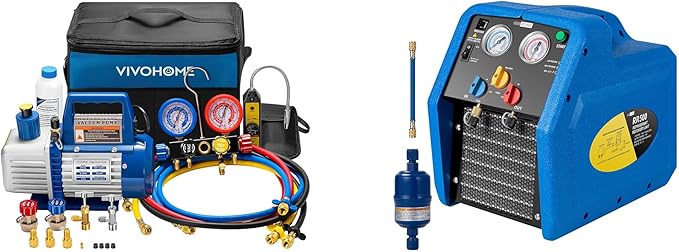
VIVOHOME Upgraded 4CFM 1/3 HP 1-Stage HVAC Vacuum Pump and 4-Way AC Manifold Gauge Set R1234YF Portable Refrigerant Recovery
Category: Refrigerant Recovery
Check Current PriceIntro answer: VIVOHOME fits DIY budgets; Robinair suits certified professional shops. VIVOHOME bundles pump, manifold, and recovery machine for R1234yf service. This comparison focuses on Refrigerant Recovery kit includes and safe use.
VIVOHOME R1234YF vs Robinair: side by side kit comparison
Primary VIVOHOME kit designation for this comparison
- VIVOHOME Upgraded 4CFM 1/3 HP 1-Stage HVAC Vacuum Pump and 4-Way AC Manifold Gauge Set R1234YF Portable Refrigerant Recovery
VIVOHOME R1234YF Upgraded 4CFM 1/3HP targets DIY users needing combined tools. The kit includes a 4 CFM vacuum pump and a 1 HP dual-cylinder recovery machine. Those tools accelerate Refrigerant Recovery compared with buying separate components. Robinair typically provides shop-grade certified units and stronger brand support for technicians.
VIVOHOME RR500 and recovery machine specifications
- Vacuum pump: 4 CFM, 1/3 HP, 1-stage, 1440 RPM, includes 330 ml vacuum oil
- Recovery machine: 1 HP, dual-cylinder, 1750 RPM, oil-less piston, air-cooled, auto high-pressure shut-off
- Manifold set: 4-way gauge, 4 color-coded hoses, R134a quick couplers, can taps included
The listed specifications show why the reviewed VIVOHOME R1234YF refrigerant recovery system bundles matter for price-conscious buyers. The integrated vacuum pump, manifold, and recovery machine reduce setup time during service. These specs show practical trade-offs versus shop-grade equipment. Buyers gain portability and a complete accessory set for field repairs.
Which kit includes matter most for safe R1234yf recovery?
VIVOHOME Refrigerant Recovery Kit reduces pull-down time and centralizes controls for single-operator service. Technicians must check high-pressure shut-off and the pressure warning lamp panel before operation. A vacuum pump (device that removes air and moisture from AC lines) must reach proper vacuum for oil and moisture removal. Use manifold gauges that read low-side and high-side pressures accurately to prevent overpressure and ensure safe Refrigerant Recovery.
Key performance and usability differences in recovery kits
Primary VIVOHOME kit designation for performance comparison
- VIVOHOME Upgraded 4CFM 1/3 HP 1-Stage HVAC Vacuum Pump and 4-Way AC Manifold Gauge Set R1234YF Portable Refrigerant Recovery
this VIVOHOME refrigerant recovery manifold and vacuum pump balances includes and price for mobile technicians. The vacuum pump flow rate, recovery compressor configuration, and included hoses determine practical recovery speed. The kit’s dual-cylinder 1 HP recovery machine and 4 CFM pump provide faster job cycles than single small pumps. Robinair units often emphasize certification, refined controls, and dedicated service networks for shop environments.
How pump flow, gauges, and fittings influence cycle time
- Pump flow: 4 CFM vacuum pump speeds pull-down on small to medium circuits
- Recovery compressor: dual-cylinder 1 HP unit increases refrigerant transfer capacity
- Manifold and hoses: 4-way gauge and color-coded hoses improve connection speed and reduce cross-contamination
How do gauges, pumps, and fittings affect recovery speed?
VIVOHOME RR500 improves system evacuation and transfer rate compared with single-function pumps. Accurate manifold gauges reduce guesswork and shorten diagnosis time during Refrigerant Recovery. Hoses with correct diameter and quality fittings lower restriction and permit higher throughput. Technicians should match hose size, valve positions, and pump flow to the vehicle or equipment capacity for best performance.
Choosing VIVOHOME R1234YF or Robinair for R1234yf service needs
Primary VIVOHOME kit designation for purchase guidance
- VIVOHOME Upgraded 4CFM 1/3 HP 1-Stage HVAC Vacuum Pump and 4-Way AC Manifold Gauge Set R1234YF Portable Refrigerant Recovery
The reviewed VIVOHOME R1234YF refrigerant recovery system suits DIY mechanics and light-service pros on a budget. The kit’s included leak detector, can taps, and quick couplers reduce additional purchases for roadside work. Professionals who require department-level certification, documented service logs, and factory-level support may prefer established service brands. Consider warranty coverage and electrical specifications before committing to any recovery kit choice.
Checklist for shop vs mobile use and certification needs
- Mobile field use: portability, included hoses, and compact vacuum pump are priorities
- Shop use: certified recovery units, formal service support, and documented warranties matter more
- Safety includes: auto high-pressure shut-off, pressure warning lamp, and larger condensers reduce risk
What safety steps should technicians follow during recovery?
the reviewed VIVOHOME R1234YF refrigerant recovery manifold and vacuum pump requires monitoring high-side pressure and using appropriate PPE. Always wear eye protection and gloves when handling refrigerant to prevent frostbite and chemical exposure. Ventilation matters; perform recovery outdoors or in ventilated bays to avoid inhalation. Use a refrigerant scale (device that measures recovered refrigerant mass) to track recovered mass and comply with environmental regulations.
Common follow-up questions about choosing recovery kits
- Can I use this kit on all R1234yf vehicles? Use manufacturer compatibility lists; the kit supports common R1234yf servicing but check vehicle requirements.
- Do I need certification to operate recovery equipment? Local laws often require HVAC or EPA-style certification for refrigerant handling.
- How long does a typical recovery cycle take? Cycle time varies; small passenger circuits often finish under 20 minutes with proper setup.
Choosing between a portable all-in-one kit and a shop-grade unit requires matching job types and frequency. Evaluate kit specifications, support options, and local regulatory requirements before purchase. Prioritize safety includes and documented compatibility when you plan long-term service work.