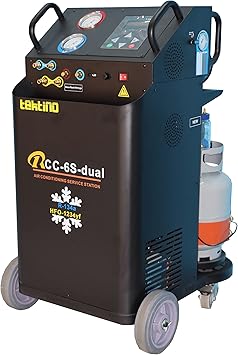
RCC RCC-6S-Dual Fully Automatic Refrigerant Recovery Machine for R134a and R1234yf
Category: Refrigerant Recovery
Check Current PriceRCC RCC-6S-Dual Fully Automatic Refrigerant Recovery Machine for R134a and R1234yf likely outperforms rivals. It pairs dual cylinders and high recovery efficiency for mixed refrigerant servicing. This device fits the Refrigerant Recovery category for aircraft and automotive HVAC.
Why Tektino RCC-6S-Dual Excels in Aircraft A/C Recovery
RCC RCC-6S-Dual Fully Automatic Refrigerant Recovery Machine for R134a and R1234yf delivers consistent Refrigerant Recovery with aviation-grade workflow controls. The dual-cylinder arrangement isolates R-134a from HFO-1234yf, preventing cross-contamination and reducing operator switching time. The unit s built-in automation controls vacuum, recovery, oil injection and charge steps to minimize manual steps during aircraft turnaround. These offers reduce human error and speed maintenance on tight ramp schedules.
Key RCC-6S-Dual specifications most relevant to aircraft technicians
- Refrigerants supported: R134a and HFO-1234yf
- Average recovery speed: 0.25 kg/min
- Recovery efficiency: 96 percent
- Cylinder capacity: 10 kg per cylinder (two cylinders)
- Vacuum pump capacity: 60 L/min
- Compressor power: 3/8 HP; power: AC110V 1060Hz
- Display: 4.3-inch color LCD; cylinder load cell accuracy: 10 g
These listed specifications give technicians concrete expectations for job planning and equipment selection. The 10 kg cylinder capacity supports bulk pulls on larger loop segments and simplifies storage on service trolleys. The 96 percent recovery rating and 0.25 kg/min speed let teams estimate job time under normal conditions. Visible load-cell readout helps prevent overfill and supports accurate documentation for maintenance logs.
How fast can recovery be completed on Boeing 737?
RCC RCC-6S-Dual recovers refrigerant at 0.25 kg/min, providing measurable completion times. Assuming a 5-12 kg charge, recovery completes in roughly 20-48 minutes at rated speed. Field factors like system contamination, trapped liquid, or warm-up time extend the real-world duration. Technicians should plan for additional time for leak diagnosis, evacuations, and system pressurization.
Comparing dual-port refrigerant recovery units for aircraft
RCC RCC-6S-Dual Fully Automatic Refrigerant Recovery Machine for R134a and R1234yf differentiates itself with separate condensers and automated workflows built specifically for mixed-refrigerant service. The machine s dual condensers and fans reduce heat load during continuous recovery, which improves throughput compared with single-condenser designs. Many competing brands such as Robinair, Yellow Jacket, and CPS offer robust single-cylinder or manual-switch units, but they often require extra manual steps for refrigerant type changes. For aircraft environments, the RCC-6S-Dual s automation, load-cell accuracy, and oil-management offers reduce operator touches and compliance risk.
Direct technical comparison points technicians should evaluate
- Cylinder arrangement: dual dedicated cylinders versus single shared cylinder
- Recovery efficiency: RCC-6S-Dual rated 96 versus unspecified competitor ranges
- Vacuum capacity: 60 L/min versus commonly lower-capacity bench units
- Automation level: fully automatic cycle versus semi-automatic competitor models
- Load-cell accuracy: 10 g for precise charging and documentation
These comparison points guide procurement choices for shop managers and MRO planners. Dual dedicated cylinders avoid cross-mixing and save time when switching refrigerants mid-shift. Higher vacuum and automation reduce total labor minutes per job and lower the chance of environmental release. Prioritize offers based on the fleet mix and whether technicians service both R-134a and HFO-1234yf aircraft.
What maintenance schedule prevents clogging in cabin systems?
RCC Refrigerant Recovery Machine (Automotive HVAC) issues an automatic reminder after 600 operations, which technicians should treat as a maintenance checkpoint. At that interval, replace internal filters, inspect condensers, change oil and verify the vacuum pump seals to prevent restriction and clogging. Perform a visual check of hoses, service couplers, and the dual condensers every 100 operations to catch wear early. Regular filter and oil service reduces contamination risk and helps protect aircraft cabin system components during refrigerant handling.
Recommended routine tasks and service intervals for aircraft service stations
- Every 100 operations: inspect hoses, couplers, and fans
- Every 600 operations: replace filters, change oil, verify pump seals
- After any contamination event: replace oil bottle and purge cylinders
- Annually: calibrate load cells and verify pressure-gauge accuracy
Follow these tasks to reduce clogging risks in cabin evaporator and liquid line components. Use fresh oil bottle capacity specs (250 ml new, 400 ml for old oil bottle) when topping or replacing oil. Keep spare service hoses and replacement filters on hand to avoid downtime during aircraft line maintenance.
Tektino RCC-6S-Dual Operational Tips for A/C Technicians
RCC RCC-6S-Dual Fully Automatic Refrigerant Recovery Machine for R134a and R1234yf operates best when technicians follow a predictable workflow and pre-check list. Begin each job by confirming cylinder selection, valve positions, and the unit s grounding to prevent electric or cross-flow mishaps. Use the 4.3-inch LCD to verify program selection and watch the load-cell readout during fills to avoid overcharge. Proper pre-job setup cuts service time and reduces the chance of in-flight delays caused by rework.
Can this machine safely recover R-134a from ATR 72?
RCC-6S-Dual Refrigerant Recovery Machine for Automotive AC supports safe R-134a recovery from ATR 72 systems when operators follow aircraft manufacturer procedures. The unit s separate R-134a cylinder and 96 percent recovery rating help meet typical service standards for reclaim operations. Operators must confirm aircraft-specific charge volumes and line procedures with ATR maintenance manuals before starting recovery. Always verify system compatibility, use approved service ports, and document recovered weights using the unit s 10 g load-cell accuracy.
Practical follow-up questions technicians search next
How do I verify recovered refrigerant purity before reuse? Use inline moisture indicators and weigh recovered refrigerant; discard if contamination exceeds allowable limits. What spares should I stock for field operations? Keep spare filters, service hoses, an extra 250 ml oil bottle, and a replacement vacuum pump seal kit. How long does a typical calibration take? Load-cell calibration usually takes one to two hours with a certified weight set and minimal disassembly.