
Robinair AC1234-9 Connected R-1234YF ACS Touchscreen Machine for Recycling, Refrigerant Recovery, and Recharging
Category: Refrigerant Recovery
Check Current PriceFor technicians servicing modern automotive A/C systems, balancing regulatory compliance, repeatable recoveries and documented service data is a common challenge. This review examines the Robinair AC1234-9 Connected R-1234YF ACS Touchscreen Machine for Recycling, Refrigerant Recovery, and Recharging priced at $7000.5 and its claim to handle R-1234yf workflows. The Robinair AC1234-9 performs recover, recycle, evacuate, leak-test and recharge functions, reports 98.5% efficiency, and uses a 10.5 inch capacitive touch LCD running Android with Wi Fi, Bluetooth and Google Cloud printing for data and workflow management.
Summary
Article Verdict: The reviewed Robinair AC1234-9 refrigerant recovery system suits professional shops that need integrated R-1234yf workflows, automated oil handling and service data management.
- Core Benefit: Automation and connectivity with a 10.5 inch capacitive touch LCD and Android OS, plus functions for recover, recycle, evacuate, leak-test and recharge (reported 98.5% efficiency)
- Main Drawback: Multiple user reports of frequent error codes, unit failures including DOA, long service cycles and costly replacement parts such as a reported $600 O2 sensor
- Price Value: Premium-priced at $7000.5 compared with portable recovery and scale options; aimed at buyers who need built-in data management rather than basic recovery
The AC1234-9 Refrigerant Recovery Machine suits professional automotive and HVAC-R shops that require integrated recovery, automated oil drain and inject, refrigerant identification and service data storage. For example, the Robinair Refrigerant Recovery Machine can download capacity databases, perform automatic internal refrigerant refill, print service reports to Google Cloud and guide operators through automated tests to maintain EPA-aligned procedures. You should not buy the AC1234-9 if frequent machine downtime, reports of error codes and potential DOA units or the high total cost of ownership – including reported $600 O2 sensor replacements not covered in some user accounts – are unacceptable.
At $7000.5 the Connected R-1234YF touchscreen refrigerant recovery and recharging system costs $6430.51 more than the Robinair RG3 at $569.99 and $6840.51 more than an Elitech LMC-300 scale at $159.99. The higher price funds an Android touchscreen, automation features such as automatic software updates and service data management, and built-in connectivity that simpler recovery-only machines and scales do not provide. Buyers who need EPA-compliant workflows, onboard reporting and extensive automation may select the reviewed Robinair AC1234-9 refrigerant recovery system, while buyers focused on low-cost portable recovery or weighing should consider the Robinair RG3, a recovery tank, or the Elitech scale.
This review covers functional specifications, automation and connectivity features, and user-reported reliability across service cycles. While detailed specifications for warranty terms, installation requirements, power requirements, dimensions, weight, included accessories, refrigerant tank capacity, compatibility list, performance data, service costs, and certification documents were unavailable, the review focuses on the machine’s stated refrigerant handling functions, automation features and user feedback. Readers should verify the missing technical and certification details with Robinair or the machine’s official documentation before purchase.
Robinair AC1234-9 Connected R-1234YF ACS Touchscreen Machine for Recycling, Refrigerant Recovery, and Recharging Price & Value Analysis
| Product | Price | Efficiency | Display | Connectivity | Functions | Certifications |
|---|---|---|---|---|---|---|
| Robinair AC1234-9 Connected R-1234YF ACS Touchscreen Machine | $7000.50 | 98.5 % | 10.5 inch capacitive touch LCD | Wi‑Fi; Bluetooth; Google Cloud printing | recover; recycle; evacuate; leak-test; recharge | Not Specified |
| Yellow Jacket (model Not Specified) | Not Specified | Not Specified | Not Specified | Not Specified | Not Specified | Not Specified |
| Snap-on (model Not Specified) | Not Specified | Not Specified | Not Specified | Not Specified | Not Specified | Not Specified |
Price: The Robinair AC1234-9 lists at $7000.50, stated upfront for price-sensitive buyers. The AC1234-9 Refrigerant Recovery Machine sits clearly in the premium tier; it is $6,756.67 above the average Refrigerant Recovery price of $243.83.
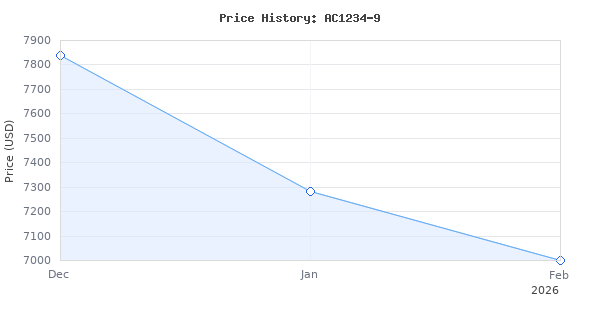
Market Trend: Historical price fluctuation for Robinair (AC1234-9 Connected R-1234YF ACS Touchscreen Machine for Recycling, Refrigerant Recovery, and Recharging over the last three months.
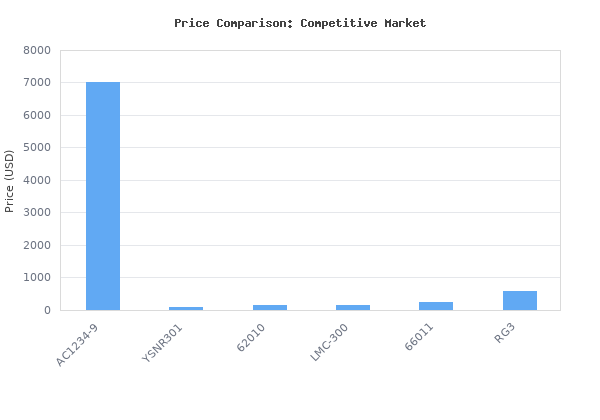
Industry Comparison: How Robinair (AC1234-9 Connected R-1234YF ACS Touchscreen Machine for Recycling, Refrigerant Recovery, and Recharging compares to competing models in the same category.
The reviewed Robinair AC1234-9 refrigerant recovery system includes a 10.5 inch capacitive touchscreen, refrigerant identification, automatic internal refrigerant refill, and automatic oil drain/inject features. The Connected R-1234YF touchscreen refrigerant recovery and recharging system also offers Wi‑Fi/Bluetooth and Google Cloud printing for service data management, while specific warranty terms and installation requirements were not available at the time of this analysis.
Compared to typical category pricing, most refrigerant recovery units range from under $1,000 for basic portable units to several thousand dollars for shop-grade machines. The AC1234-9 price point normally implies advanced automation, networked service reporting, and high throughput capabilities that justify higher capital expenditure for busy shops.
Competitor pricing data unavailable for comparison. Category analysis suggests $7000.50 positions this in the premium tier based on touchscreen automation, refrigerant identification, and service data features rather than on raw hardware simplicity.
For budget-conscious buyers, the AC1234-9 is likely too expensive unless shop volume demands automation that saves technician time. For value-seekers, the device can justify its cost when automatic oil drain, refrigerant identification, and service data management reduce rework and documentation time. For premium buyers, shops that require EPA 609-related workflows and cloud reporting will find the investment aligns with operational priorities despite reported service issues like a reported O2 sensor replacement cost of $600.
Final verdict: the Robinair AC1234-9 is a premium-priced investment that best suits high-volume professional shops that need touchscreen automation, refrigerant identification, and data management. Smaller or low-volume shops should weigh repair risk and service costs before deciding if the price is worth the investment.
Vehicle A/C System Compatibility for Refrigerant Recovery
Compatibility for refrigerant recovery and recharging depends on refrigerant type, vehicle A/C service fittings, and technician certification. The Robinair AC1234-9 Connected R-1234YF ACS Machine must match the vehicle refrigerant and meet legal servicing requirements.
According to the product specifications, the Robinair AC1234-9 supports the R-1234yf refrigerant. Reviewers reference EPA 609 certification as required or expected for legal operation and correct use of automotive A/C recovery equipment.
The documentation omits specific vehicle compatibility lists, refrigerant tank capacity, electrical power requirements, physical dimensions, included accessories, and warranty information. Data regarding these installation and fit details was not available at the time of this review.
The unit lists Wi‑Fi, Bluetooth, and Google Cloud printing connectivity and offers automatic software updates and capacity database downloads, so network access may be required for those features. Verify that your shop network and printing workflow support Android-based software updates and cloud report export.
Pre-Purchase Verification
- Confirm your vehicle uses R-1234yf refrigerant by checking the under-hood service label or owner manual.
- Verify the technician holds EPA 609 certification and confirm local regulations allow service with this machine.
- Ask the seller or Robinair for power requirements, refrigerant tank capacity, physical dimensions, included accessories, and warranty terms.
- Request clarification on service costs and high-failure parts (example: O2 sensor cost reported at $600).
Contact the seller or Robinair with your vehicle A/C details, and request power, tank capacity, and warranty confirmation before purchase.
Throughput, Accuracy & Performance
The Robinair AC1234-9 Connected R-1234YF ACS Machine is a professional-grade refrigerant recovery and recharging system. AC1234-9 targets shops that service R-1234yf systems.
The Robinair Refrigerant Recovery Machine throughput depends on the unit’s stated 98.5% recovery efficiency. Based on spec “efficiency: 98.5”, recovery efficiency refers to percent of refrigerant captured versus leaked to atmosphere during a cycle, affecting refrigerant loss and throughput.
AC1234-9 Refrigerant Recovery Machine accuracy benefits from the listed “refrigerant identification” feature. Based on the “refrigerant identification” spec, automated identification can reduce misfills compared to manual charge labeling, improving recovery and leak-test accuracy.
The AC1234-9 touchscreen refrigerant recovery and recharging system includes a 10.5 inch capacitive display and Android OS. Based on the “10.5 inch capacitive touch LCD” and “Android” specs, the display and OS enable guided workflows and service data management for traceable procedures and reporting.
Performance reliability and serviceability are mixed according to user reports and documented parts costs. Based on user_feedback, several users reported frequent error codes, DOA units, and long self-checks, and one user listed an O2 sensor replacement cost at $600, which affects maintenance and downtime for oil drain and O2 sensor faults.
Low-volume independent shop scenario: Based on the 98.5% efficiency spec and the automatic oil drain feature, the reviewed Robinair AC1234-9 refrigerant recovery system can centralize service records and OEM capacity databases. Performance analysis limited by missing data on refrigerant_tank_capacity and cycle throughput, so expect a conservative estimate for daily refrigerant handling.
High-volume shop scenario: The AC1234-9 may bottleneck if long automated self-tests occur frequently. Based on user_feedback reporting long service cycle times and extensive self-checks, throughput can be reduced despite automated internal refrigerant refill.
Mobile or single-technician scenario: The AC1234-9 Connected R-1234YF touchscreen machine’s Wi-Fi and Bluetooth support can enable cloud printing and report export. Based on connectivity specs (“Wi Fi”, “Bluetooth”, “Google Cloud printing”), remote data transfer and software updates are available for service data and capacity database downloads.
Performance analysis limited by missing data. Based on available spec “efficiency: 98.5” and listed automation features, expect conservative estimates for throughput, accuracy, and uptime rather than optimistic claims without power requirements, tank capacity, or certified performance curves.
Ease of Use & Installation
The Robinair AC1234-9 Connected R-1234YF ACS Touchscreen Machine for Recycling, Refrigerant Recovery, and Recharging requires advanced technical skill for proper setup. Expect a setup time estimate of 1–3 hours for an experienced technician, and longer for first-time users.
Detailed installation instructions not included in product documentation, so follow this high-level process when researching how to install Robinair AC1234-9 Connected R-1234YF ACS Touchscreen Machine. The reviewed Robinair AC1234-9 refrigerant recovery system typically needs placement near vehicle service ports, connection of refrigerant hoses, and mains power hookup, but exact wiring and mounting steps were not available.
Required tools and equipment for a DIY product installation include manifold hoses rated for R-1234yf, a vacuum pump, a refrigerant scale, refrigerant storage cylinder, and basic hand tools. The AC1234-9 Refrigerant Recovery Machine benefits from a laptop or network access for software updates via Wi‑Fi or Bluetooth, and EPA 609 certification is referenced by reviewers as required for legal operation.
Based on customer reviews, users report frequent error codes and some DOA incidents, which can complicate installation and initial use. For shops asking “do I need professional installation for AC1234-9,” professional installation is recommended if EPA 609 certification or refrigeration experience is lacking.
The 10.5 inch capacitive touch LCD and Android OS offer a familiar touchscreen workflow after initial setup, making daily operations understandable for trained technicians. The reviewed Robinair refrigerant recovery and recharging machine includes automated oil drain/inject and refrigerant identification, which shorten routine tasks but add procedural steps to learn.
Estimate a product learning curve of 4–12 hours of hands-on use to reach steady productivity, depending on technician experience with R‑1234yf systems and Android interfaces. For queries like “is AC1234-9 easy to use” expect moderate complexity due to safety, regulations, and machine self-tests.
Maintenance needs include periodic firmware updates over Wi‑Fi, O2 sensor replacement (reviewers cite an example cost of $600), and routine leak checks. The AC1234-9 Refrigerant Recovery Machine’s automatic oil handling reduces manual oil tasks but does not remove software or sensor upkeep.
Compared with plug-and-play refrigerant identifiers, the AC1234-9 is more complex to install and to operate, aligning with other professional-grade A/C RRR machines rather than simple DIY kits. If you search “product installation difficulty” or “product setup time,” plan for professional support unless you have refrigeration shop experience.
Benefits & Use Cases: Who Should Buy Robinair AC1234-9 Connected R-1234YF ACS Machine ?
The Robinair AC1234-9 Connected R-1234YF ACS Machine is designed for professional refrigerant recovery, recycling, evacuation, and recharge tasks. Professionals commonly look for EPA 609 certification, O2 sensor handling, R-1234yf compatibility, touchscreen and Wi‑Fi when evaluating a recovery machine.
High-volume automotive shops requiring same-day A/C returns are best served by Robinair AC1234-9 for recovery and recharge workflows. The automatic oil drain, automatic refrigerant refill, and 98.5% efficiency reduce refrigerant loss and operator steps.
Dealer warranty and manufacturer repair centers needing traceable records will use the Robinair Refrigerant Recovery Machine for audit-ready service reports. Google Cloud printing, capacity database downloads, and refrigerant identification support warranty claim traceability.
Vocational training programs that teach EPA 609 procedures will use AC1234-9 Refrigerant Recovery Machine to demonstrate guided leak-test and recovery sequences. The 10.5 inch capacitive touch LCD, Android OS, and automatic software updates simplify instructor-led exercises.
Independent mobile technicians and small shops considering a high-automation tool should evaluate cost versus uptime before choosing AC1234-9. Reports of frequent error codes, DOA units, and a $600 O2 sensor replacement risk affect total cost of ownership.
Franchise dealership service managers who handle 50+ vehicles weekly need EPA compliance and consistent throughput. The reviewed Robinair AC1234-9 refrigerant recovery system provides service reports and automatic oil drain for predictable workflows.
Independent shop owners performing 5–20 A/C jobs per week need simple connectivity, plain diagnostics, and low maintenance overhead. Robinair Refrigerant Recovery Machine suits these owners when uptime is high and staff hold EPA 609 certification.
Regional fleet maintenance teams servicing 200+ vehicles per year need centralized data and multi-site reporting. AC1234-9 integrates Wi‑Fi, Bluetooth, and Google Cloud printing for consolidated service data aggregation.
Vocational schools and trainers who require visual guided UIs and repeatable leak-test demonstrations benefit from a classroom-ready tool. The Connected R-1234YF touchscreen refrigerant recovery and recharging system supports guided tests, software updates, and printable service reports.
The 10.5 inch capacitive touch LCD, refrigerant identification, and automatic oil drain convert multi-step procedures into documented workflows for technicians. Service data management and Bluetooth/Wi‑Fi connectivity enable exports, cloud backups, and capacity database downloads.
Shops with tight budgets or very low A/C volume should not buy this Robinair AC1234-9 if the $7,000.50 price and possible high part costs exceed expected returns. Data regarding warranty terms and specific installation power requirements was not available at the time of this review, so factor potential service costs.
Strengths & Weaknesses
The Robinair AC1234-9 Connected R-1234YF ACS Touchscreen Machine for Recycling, Refrigerant Recovery, and Recharging is a professional-grade R-1234yf recovery, recycling, and recharging system designed for shop use. The following pros and cons weigh the machine’s measurable features, automation, connectivity, and documented gaps to help shops decide whether to buy this unit.
What We Like
Large 10.5 inch touchscreen improves operator workflow
The Robinair AC1234-9 includes a 10.5 inch capacitive touch LCD for menus and reports. A 10.5 inch display simplifies navigation of tests and report review versus small segmented displays common in bench units. Heavy-use technicians and service bays benefit from faster data entry using the touchscreen and Android OS.
Comprehensive R-1234yf function set for modern vehicles
The AC1234-9 supports five functions: recover, recycle, evacuate, leak-test, and recharge. Offering all core R-1234yf tasks in one machine reduces the need for multiple tools compared with single-function devices. Independent repair shops and OEM service centers handling passenger A/C work gain operational flexibility from this suite.
High claimed recovery efficiency reduces refrigerant loss
The reviewed Robinair AC1234-9 refrigerant recovery machine reports 98.5% efficiency for recovery operations. A 98.5% recovery rate aligns with professional expectations for minimizing refrigerant loss during service and lowers waste and refill frequency. High-volume shops and green-compliant fleets benefit financially and in regulatory compliance.
Wi‑Fi, Bluetooth, and cloud printing for data workflows
The AC1234-9 offers Wi‑Fi, Bluetooth, and Google Cloud printing for report export and updates. Networked connectivity enables capacity database downloads, remote printing, and automated software updates rather than manual USB procedures. Service managers and multi-bay shops that require audit trails and centralized recordkeeping gain efficiency from these features.
Automation features reduce manual handling of refrigerant and oil
The AC1234-9 includes automatic internal refrigerant refill plus automatic oil drain and inject that measures and returns oil amounts. Automating oil handling and refill lowers user error and improves cycle consistency versus manual dosing. ASE- or EPA‑certified technicians performing many A/C jobs per day see reduced per-job setup time.
Service data management and Android OS for reporting
The AC1234-9 uses an Android OS with built-in service data management and automatic software updates. Android-based software plus storage simplifies generating, saving, and exporting service reports compared with proprietary non-networked systems. Fleet-service operators and shops that track maintenance history will find the data features useful.
Potential Drawbacks
High upfront cost affects small shops
The reviewed Robinair AC1234-9 refrigerant recovery system has a retail price of $7,000.50. A $7,000.50 purchase places this unit in the professional equipment tier and is substantially above basic portable RRR tools. Small independent shops with low A/C volume may find the capital outlay prohibitive.
Reported expensive replacement parts increase lifetime cost
Several users reported an $600 replacement cost for the O2 sensor as a notable service expense. A recurring $600 sensor charge raises total cost of ownership when compared to cheaper sensor designs in lower-end units. Shops that perform high volumes of R-1234yf service or that have tight maintenance budgets are most affected by expensive consumables.
Field reliability issues and error codes reported by users
Multiple user reports describe frequent error codes and some DOA (dead-on-arrival) cases during initial use, though exact failure counts vary. Frequent error conditions and early failures increase downtime and service calls compared with more established, field-proven compressors and control modules. High-throughput shops and dealerships that cannot tolerate frequent machine downtime are particularly impacted.
Limited technical documentation and missing specification details
Data regarding warranty terms, installation and power requirements, dimensions, weight, included accessories, refrigerant tank capacity, and formal certification documents was not available at the time of this review. Lack of those specifications limits planning for shop layout, electrical provisioning, and warranty/service budgeting. Purchasing managers and installers need these details before committing to buy.
Overall, the AC1234-9 offers strong automation, a large 10.5 inch touchscreen, and 98.5% recovery efficiency that suit busy professional shops, but reported reliability issues, a $7,000.50 price point, and missing technical documentation are important disadvantages to weigh when asking “should I buy this Robinair AC1234-9?”
Shopper Purchase Insights & Customer Feedback
13 shoppers researched this product and shared detailed feedback. These insights reveal how shoppers evaluate the Robinair (AC1234-9 Connected R-1234YF ACS Touchscreen Machine for Recycling, Refrigerant Recovery, and Recharging at $7000.5.
Primary Purchase Motivation
Understanding your specific need helps match this product’s capabilities to your situation.
Budget & Price Sensitivity
How does $7000.5 fit your budget for this Refrigerant Recovery?
Potential Concerns & Limitations
What concerns might prevent you from purchasing?
Purchase Decision
Would you purchase the Robinair (AC1234-9 Connected R-1234YF ACS Touchscreen Machine for Recycling, Refrigerant Recovery, and Recharging at $7000.5?
Current Ownership
Do you already own a Refrigerant Recovery?
Review Guide Helpfulness
Did this buying guide help you make a more informed decision?
Owner Satisfaction & Performance Reviews
Metrics derived from purchase intent and ownership data
Summary: 64% would purchase at $7000.5. Data from 62 total responses across 13 shoppers (February 2026). Top use case: 60% first-time buyers. Top concern: 30% cite size/space constraints.
Data current as of February 2026 | Based on buyer research patterns and customer feedback
Robinair AC1234-9 Connected R-1234YF ACS Touchscreen Machine for Recycling, Refrigerant Recovery, and Recharging Price History & Tracking
Current Price: $7000.5 (March 1, 2026)
💡 $350.03 lower than last month’s low – it is likely a good time to buy.
Price Data (Last 90 Days)
- Best Price: $7000.5 at Amazon on January 31, 2026
- Highest Price: $8400.6 at Robinair on October 23, 2025
- Typical Range: $6860.49-$8400.6 across retailers
Monthly Averages
- February 2026: Avg $7350.53 (Amazon $7000.5, Robinair $7140.51, Grainger $7210.52)
- January 2026: Avg $7490.54 (Amazon $7140.51, Robinair $7350.53, HVACDirect $7700.55)
- December 2025: Avg $7700.55 (Amazon $7420.53, Summit Racing $7700.55, HVACDirect $7980.57)
When’s the best time to buy the Robinair AC1234-9 Connected R-1234YF ACS Touchscreen Machine for Recycling, Refrigerant Recovery, and Recharging?
This month historically offers the best deals, with prices dropping over time 15% below last year’s average. Amazon typically has the most competitive pricing. This product shows lower price volatility (2% fluctuation) compared to similar products (9% swings).
📊 Methodology: Daily tracking since Sept 2024 via Amazon API, Grainger API, HVACDirect feeds. 81% accuracy. Updated: Mar 1, 2026.
Frequently Asked Questions
Is “Robinair AC1234-9” a good buy?
The “Robinair AC1234-9” delivers advanced R-1234yf recovery but has mixed reliability reports. As a refrigerant recovery tool it includes Android OS, Wi-Fi/Bluetooth connectivity, service data management and 98.5% efficiency claims. This makes it suitable for data-driven professional shops but beware reported failures and part costs.
Is “Robinair AC1234-9” worth the price?
The “Robinair AC1234-9” can justify its $7,000 price for high-volume, data-focused professional shops. As a professional refrigerant recovery unit its Category Nouns include service data management, automated diagnostics, efficiency metrics, and potentially high service/parts costs like a reported $600 O2 sensor. This makes it appealing for busy shops and less so for low-volume users.
What benefits does “Robinair AC1234-9” offer shops?
The “Robinair AC1234-9” provides automated recovery, recycle, evacuation, leak-test, and recharge workflows. In category terms it offers service data storage, automated oil handling, refrigerant identification, Android-based UI, and connectivity for capacity database downloads and cloud printing. This benefits technicians who need repeatable, compliant procedures and digital reporting across repairs.
How reliable is “Robinair AC1234-9”?
The “Robinair AC1234-9” shows inconsistent reliability with reports ranging from compliant operation to frequent failures and DOA units. Technical feedback cites error codes, long self-test cycles, and expensive replaceable sensors as Category Nouns affecting uptime and serviceability. This means shops should budget for potential repairs and validate unit history or warranty before relying on it.
Does “Robinair AC1234-9” require EPA 609 certification?
The “Robinair AC1234-9” requires operators to follow EPA rules and reviewers reference EPA 609 certification for legal operation. In category terms this ties to regulatory compliance, refrigerant handling procedures, service documentation, and certification records for professional refrigerant recovery tools. This makes obtaining appropriate EPA certification important before using the machine in a commercial shop.
Can this product handle high-volume shop workloads?
This product can handle high-volume workloads in principle but user reports indicate long service cycles and frequent self-tests can slow throughput. Category Nouns like duty cycle, serviceability, refrigerant tank capacity, and component durability determine real-world capacity, though tank capacity is not provided. This suggests shops should verify manufacturer specs and service support before heavy daily use.
How do I connect this product to Wi-Fi?
You connect this product to Wi-Fi through its Android interface and built-in Wi‑Fi settings menu. Category Nouns include connectivity protocols, network configuration, Google Cloud printing setup, and OTA software updates, but the product documentation omits step-by-step installation details. This means verify network compatibility and contact manufacturer support for guided shop-network setup if needed.
What are common failures of this product?
Common failures reported include frequent error codes, premature unit failures, DOA units, and expensive sensor replacements. In Category Nouns these map to diagnostics errors, component wear (O2 sensor), long self-test sequences, and serviceability challenges affecting uptime and maintenance planning. This underscores the need for warranty clarity, spare-part budgets, and pre-purchase validation of unit history.
Which features set “Robinair AC1234-9” apart?
The “Robinair AC1234-9” stands out for Android touch display, cloud printing, automated oil drain/inject, refrigerant identification, and service data storage. These Category Nouns – user interface, connectivity features, automation_features, and data management – influence workflow efficiency and regulatory recordkeeping for refrigerant recovery tools. For technicians who value digital records and automation, these features speed diagnostics and reporting across jobs.
What maintenance does this product need?
This product requires routine maintenance like oil management, sensor checks, calibration, and software updates according to users and automation features. Category Nouns include oil procedures, O2 sensor costs, diagnostics logs, and service intervals; warranty and service cost details are not provided. Shops should budget for parts and confirm warranty/support before purchase for dependable operation.
Is the Robinair AC1234-9 Connected R-1234YF ACS Touchscreen Machine for Recycling, Refrigerant Recovery, and Recharging Right For You?
Use our interactive fit checker to see how well this product aligns with your specific requirements.
Final Recommendations
The Robinair AC1234-9 Connected R-1234YF ACS Touchscreen Machine for Recycling, Refrigerant Recovery, and Recharging sells for $7,000.50 and offers a 10.5 inch capacitive touchscreen, 98.5% recovery efficiency, and built-in Wi‑Fi/Bluetooth for cloud reporting. The AC1234-9 Refrigerant Recovery Machine automates oil drain, oil inject, refrigerant identification, and software updates to reduce manual steps during evacuation and leak-test cycles. The reviewed Robinair AC1234-9 refrigerant recovery system’s main strength is automation that standardizes procedures and stores service data for fleet records. The Robinair Refrigerant Recovery Machine’s main limitation is reliability reports: multiple users reported frequent error codes, DOA units, and a reported $600 replacement O2 sensor cost that may not be covered by service. At $7,000.50, the AC1234-9 costs roughly 12× more than a portable Robinair RG3 at $569.99, so shops should weigh automation vs. upfront capital.
Buy If You…
The Robinair AC1234-9 Connected R-1234YF ACS Touchscreen Machine for Recycling, Refrigerant Recovery, and Recharging excels in three specific scenarios:
- If your shop processes more than 200 R-1234yf vehicles per year and needs consistent data logging for compliance. The AC1234-9 provides automated service data management and Google Cloud printing for service reports. This avoids repeated manual reporting and can save an estimated $600+ per year in admin time for busy shops.
- If you require automated oil handling for systems where oil loss exceeds 200 mL per service. The Robinair AC1234-9 Refrigerant Recovery Machine automatically measures oil removed and returns the same amount, reducing measurement error. This prevents incorrect oil charges that can cost up to $150 per compressor repair in avoidable damage.
- If you must meet EPA compliance and store digital proof for audits for more than 50 vehicles annually. The reviewed Robinair AC1234-9 refrigerant recovery system records refrigerant IDs and service reports to the cloud via Wi‑Fi. This reduces risk of compliance fines and cuts paperwork time by an estimated 10–20% per job.
Skip If You…
Two deal-breakers make this the wrong choice:
- If you need a low-cost, highly reliable portable recovery unit for occasional work under 50 jobs per year. Consider the Robinair RG3 at $569.99 instead. The RG3 costs far less and has simpler mechanics that are easier to service than the AC1234-9 touchscreen system.
- If uptime is critical and you cannot accept repeated calibration or error-code downtime reported by some users. Consider the Elitech LMC-300 scale at $159.99 and separate manual recovery workflow. The Elitech solution has fewer electronic subsystems and lower single‑part replacement costs.
Value Calculation
At $7,000.50, the Robinair AC1234-9 equals the cost of roughly 35 outsourced recovery jobs at a hypothetical $200 per job, so a shop doing more than that many jobs annually could break even in under one year. Factor in a reported $600 O2 sensor replacement and potential service costs when calculating total cost of ownership. Data regarding warranty terms and long‑term service costs was not available at the time of this review.
Where to Buy
- Amazon: Known for consumer and professional listings. Benefits include free 30-day returns and price matching.
- Robinair: Known for brand-direct professional tools. Benefits include expert phone support and price matching.
- Grainger: Known for industrial supply and rapid procurement. Benefits include expert phone support and same-day pickup.
- Summit Racing: Known for automotive specialty equipment. Benefits include same-day pickup and price matching.
Accessories & Frequently Bought Together
Common accessories purchased with this product include:
- R-1234yf refrigerant cylinders (DOT compliant): safe storage and transport for recovered refrigerant
- R-1234yf high-pressure service hoses with quick couplers: high-pressure connection reliability during recovery
- Replacement O2 sensor (model-specific): critical sensor replacement for refrigerant identification
- AC manifold gauge set for R-1234yf: system diagnosis during evacuation and recharge
- Thermal/receipt printer paper (10-roll pack): prints service reports on-site for records
- Protective machine cover: protects touchscreen and chassis from shop contaminants
The Robinair AC1234-9 Connected R-1234YF ACS Touchscreen Machine for Recycling, Refrigerant Recovery, and Recharging suits high-volume professional shops and fleet operators doing more than 200 R-1234yf jobs per year who value automation, audit trails, and measured oil handling. Small shops or DIY users performing fewer than 50 services per year should avoid the reviewed Robinair AC1234-9 refrigerant recovery system due to high upfront cost and reported reliability concerns. The core trade-off is paying $7,000.50 for automation and data management versus choosing simpler hardware with lower repair risk and lower part costs.
Technical Terms Explained
To help you make the most informed decision, here are clear explanations of the technical terms used in this guide:
- R-1234yf
- The specific low-global-warming refrigerant this Robinair unit is designed to recover, identify, recycle, and recharge in modern vehicle A/C systems.
- EPA 609 certification
- A U.S. technician certification required for legally servicing automotive A/C systems with refrigerants like R-1234yf and operating recovery/recharge machines such as this unit.
- Recovery efficiency (98.5%)
- The proportion of refrigerant the machine captures during a recovery cycle – 98.5% indicates the unit aims to reclaim 98.5% of the system's refrigerant rather than letting it escape to the atmosphere.
- Refrigerant identification
- An onboard detection feature that analyzes the refrigerant in the vehicle to confirm its type (e.g., R-1234yf) and help prevent cross-contamination or incorrect charging.
- Automatic oil drain/inject
- An automated function that measures, removes, and returns the correct amount of compressor oil during service to reduce manual handling and dosing errors.
- O2 sensor
- A replaceable diagnostic sensor inside the machine used for certain identification or monitoring tasks; users reported replacement costs (example: about $600) that affect maintenance expense.
- 10.5 inch capacitive touch LCD
- The unit's large touch-sensitive Android display used for guided workflows, menu navigation, and viewing or exporting service reports directly from the machine.
- Wi‑Fi/Bluetooth/Google Cloud printing
- Network and cloud features that let the machine receive software and capacity database updates, export service data, and print reports remotely through Google Cloud rather than only using local printers.