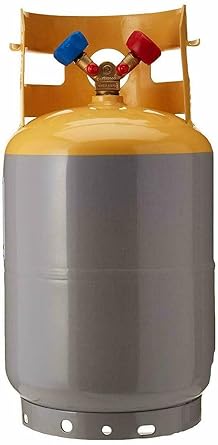
Mastercool Collar Design Pre-Charged Refrigerant Recovery Tank with 3/4-inch NPT Opening (HVAC)
Category: Refrigerant Recovery
Check Current PriceChoose the Mastercool tank for frequent HVAC recoveries; standard cylinders suit occasional tasks. Mastercool gives stainless steel durability, pre-charged convenience, and a collar handle. This Refrigerant Recovery option balances capacity, compliance, and field ergonomics.
Mastercool Refrigerant Recovery Tank compared to standard cylinders
The Mastercool Collar Design Pre-Charged Refrigerant Recovery Tank with 3/4-inch NPT offers stainless steel durability and Y-valve control. The 3/4-inch NPT opening (National Pipe Thread) accepts an 80 fill float switch, a shut-off device that stops filling at the correct level. Available capacity options include:
- 30 LB
- 50 LB
- 100 LB
These sizes suit single-truck techs and contractors doing multi-day recoveries, improving over single-use cans by reducing downtime.
How do cylinder materials and valve types affect field recovery?
Mastercool Collar Design Pre-Charged Recovery Cylinder reduces cross-contamination through stainless steel interior. Stainless bottles resist corrosion better than painted steel, so refrigerant purity and reuseability improve. Brass connectors paired with the HVAC Y-valve 1/4 enable dual-line recovery and compatibility with common service tools. The practical result shortens cycle time and lowers the chance of wrong-refrigerant introductions on site.
Cost, compliance, and safety differences for recovery cylinders
The Mastercool Collar Design Pre-Charged Refrigerant Recovery Tank costs about 105 USD. Reusable stainless construction makes the up-front price economical across many jobs versus disposable cylinders. Key safety and compliance specs include:
- Service pressure: 400 PSI
- Pressure relief valve: installed
- Connector material: brass; valve type: HVAC Y-valve 1/4
- Float-switch compatibility: accepts 80 fill float switch via 3/4 NPT opening
Buyers must verify missing items like warranty, certification, hydrostatic test date, and tare weight before relying on the cylinder for regulated jobs.
What maintenance stops cross-contamination between refrigerants?
Mastercool Refrigerant Recovery Tank reduces mixing by allowing dedicated float-switch shutoff and clean, pre-charged interiors. Always dedicate one vessel per refrigerant family (for example, one for R-134a and another for R-410A) to avoid cross-contamination. Flush hoses with dry nitrogen and purge recovery tools between refrigerants, and log tank usage and hydrostatic test dates for compliance. These steps preserve refrigerant purity and help satisfy EPA Section 608 expectations during audits.
Mastercool Refrigerant Recovery Tank buying, maintenance, and use tips
The Mastercool Collar Design Pre-Charged Refrigerant Recovery Tank with 3/4-inch NPT suits techs who need pre-charged convenience and collar handles for easier lifting. Inspect arrival condition and new-date stamps, and confirm fast shipping and sealed pressure as reviewers reported. Because the product lacks posted warranty and certifications, request the hydrostatic test date and manufacturer support before fleet purchases. Also verify float-switch fit and that your recovery machine works with the HVAC Y-valve 1/4 and brass connectors supplied.
How do I choose between refillable tanks and disposable cylinders?
The Mastercool Collar Design Pre-Charged Recovery Cylinder lowers long-term cost by allowing multiple refills and reuse. Refillable stainless tanks handle many cycles and cut per-job cost compared to disposable steel cylinders, which you discard or recycle after use. Choose refillable when you perform more than a few recoveries monthly; choose disposable for rare, emergency-only work. The limitation: refillable tanks require record-keeping, hydrostatic tests, and more upfront verification.
Follow-up questions technicians search next
- How often should I hydrostatically test a recovery cylinder? Most jurisdictions require testing every 5 years; verify local code and supplier records.
- Can one tank handle blended refrigerants? You can recover blends but dedicate tanks when purity matters; blends risk contamination if improperly reused.
- What tools pair best with this tank? Use manifold gauges, a recovery machine rated for the refrigerant, brass hoses, and an 80 fill float switch sized for 3/4-inch NPT.