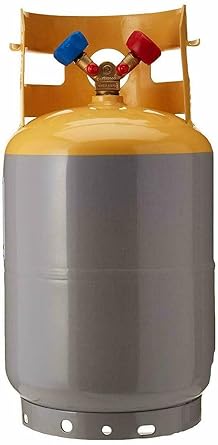
Mastercool Collar Design Pre-Charged Refrigerant Recovery Tank with 3/4-inch NPT Opening (HVAC)
Category: Refrigerant Recovery
Check Current PriceYes the Mastercool Collar Design pre-charged cylinder suits light mobile HVAC work.
It arrives pressurized and contains usable refrigerant for short on-site recoveries.
This Refrigerant Recovery solution simplifies truck stocking and reduces return trips.
Mastercool Collar Pre-Charged Recovery Cylinder for Mobile Techs
The Mastercool Collar Design Pre-Charged Refrigerant Recovery Tank with 3/4-inch NPT suits truck-based short recoveries.
It ships pre-charged, uses stainless steel bottle construction, and accepts CFCs, HFCs, HCFCs, and blends.
The collar handle eases lifting compared to threaded valve necks and improves task speed.
Buyers pay about 105 USD and choose 30, 50, or 100 lb sizes.
Key product specifications, materials, and compatibility for quick reference
- Capacity options: 30 lb, 50 lb, 100 lb
- Service pressure: 400 PSI
- Opening: 3/4-inch NPT (accepts 80 fill float switch)
- Valve type: HVAC Y-Valve 1/4-inch
- Bottle material: stainless steel; finish: powder coated (high-gloss)
- Connector material: brass; pressure relief valve: included
- Refrigerant compatibility: CFCs, HFCs, HCFCs, blends
- Price (single unit): 105 USD
How does a pre-charge collar change field recovery workflow?
Mastercool Collar Design Pre-Charged Recovery Cylinder reduces setup time and avoids returning empty cylinders to the shop.
Technicians attach the 1/4-inch HVAC Y-valve (two-branch service valve), open brass connectors, then draw vapors.
The 3/4 NPT opening accepts an 80 fill float switch (a device that stops filling at about 80 ).
This workflow saves time on single-system calls and reduces truck clutter for outdoor speaker-style portability.
Portability and weight trade-offs for on-truck refrigerant recovery
The Mastercool Collar Design Pre-Charged Refrigerant Recovery Tank with 3/4-inch NPT adds refrigerant payload but simplifies truck rolls.
A 30 lb unit contains thirty pounds of refrigerant; the bottle’s tare weight (empty weight) remains unspecified.
Because the seller omits hydrostatic test dates (last pressure test), technicians should request certification before the trip.
This trade-off requires choosing 30, 50, or 100 lb variants and planning lift assistance for the larger sizes.
What are realistic weight savings for technicians carrying cylinders?
Mastercool Refrigerant Recovery Tank delivers stored refrigerant on-truck but does not reduce gross payload.
You save logistical weight more than cylinder mass by carrying usable refrigerant instead of spare empties.
For example, one charged 50 lb unit can replace an extra 30 lb spare on short jobs.
But you must factor lifting, secure mounting, and vehicle payload limits before selecting cylinder sizes.
Mastercool Collar Pre-Charged Cylinder compliance and regulations
The Mastercool Collar Design Pre-Charged Refrigerant Recovery Tank with 3/4-inch NPT lists a 400 PSI service rating.
the seller omits hydrostatic test dates, certification, and a warranty, which DOT inspectors often require evidence of.
Technicians must secure the cylinder upright, fasten it per 49 CFR rules, and carry handling documentation on vans.
Because float-switch compatibility exists, reuse for recovery is feasible, but operators should verify local EPA disposal rules.
How do transport and DOT rules affect charged cylinders on vans?
this Mastercool pre-charged refrigerant recovery tank requires proper securement and visible labeling during van transport.
DOT rules require cylinders show test dates, be leak-free, and mount to prevent tipping or puncture.
Do I need hydrostatic tests; yes, technicians must carry cylinders with current hydrostatic certification for charged transport.
Can I store the charged cylinder overnight; often allowed when secured, but confirm local fire codes.