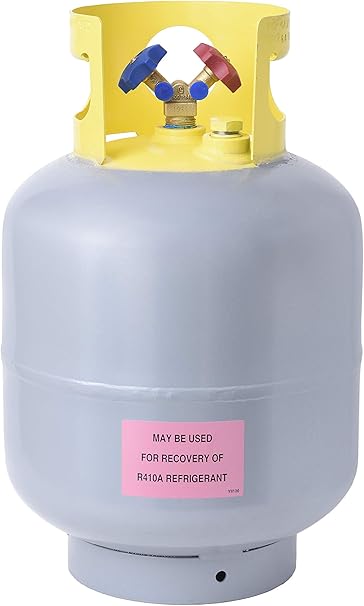
Flame King YSNR501 50-Pound Refrigerant Recovery Cylinder Tank (Gray)
Category: Refrigerant Recovery
Check Current PriceFlame King YSNR501 50-Pound Refrigerant Recovery Cylinder Tank (Gray) suits garage workshops best.
It holds 50 pounds, carries DOT and TC certifications, and arrives vacuum-sealed and ready.
This Refrigerant Recovery tool balances capacity, certification, and price for DIY mechanics.
Flame King YSNR501 50-Pound Recovery Cylinder Tank Guide
Flame King YSNR501 50-Pound Refrigerant Recovery Cylinder Tank (Gray) meets DOT and TC certifications and uses welded steel.
DOT means U.S. Department of Transportation; TC denotes Transport Canada certification.
The tank arrives empty, pre-purged, and vacuum-sealed, ready for filling at shops or suppliers.
Buyers report rapid vacuum pull to 170-190 microns, where a micron measures vacuum depth.
What offers make a refrigerant cylinder ideal for workshop use?
Flame King YSNR501 retains vacuum to 170-190 microns quickly.
Steel welds, X-ray and hydrostatic testing (pressure test ensuring cylinder integrity), and powder coating improve durability in garage environments.
Variants with a forklift footer and multiple capacity options (30, 50, 123, 239, 1000 lb) help shops match logistics.
These characteristics reduce contamination risk, speed transfers, and lower downtime for routine vehicle AC repairs.
Picking the right refrigerant recovery cylinder for garage shops
Flame King YSNR501 50-Pound Refrigerant Recovery Cylinder Tank (Gray) matches most two-bay or single-bay garage workflows.
Choose 30-, 50-, or 123-pound models and note the 50 lb variant lists at $119 USD.
A 50 lb tank serves 8-15 car pump-downs, where pump-down recovers vehicle refrigerant into the cylinder.
This makes the 50-pound model a balanced choice for first-time buyers like choosing speaker wattage.
How do I size a recovery tank for multiple shop vehicles?
YSNR501 enables estimating pump-downs: roughly 8-12 cars per 50 lb tank in busy shops.
Calculate needs using refrigerant weight per system: compact cars 1-3 lb, midsize 2-4 lb, SUVs 3-6 lb.
Factor extra capacity for recovery inefficiency, leaks, and different refrigerants to avoid mid-shift refills.
Flame King YSNR501 50-Pound Recovery Cylinder Tank Safety Tips
Flame King YSNR501 50-Pound Refrigerant Recovery Cylinder Tank (Gray) meets DOT, TC, and hydrostatic test standards.
Always store cylinders upright, secure them against tipping, and tag the last hydrotest date where staff can see it.
Use calibrated scales and legible labels to monitor fill percentage and never exceed certified fill recommendations.
Keep incoming units’ packaging state documented (empty, pre-purged, vacuum-sealed) and inspect before first shop use.
What inspection steps ensure a cylinder stays leak-free?
YSNR501 Refrigerant Recovery Cylinder Tank shows zero detectable leaks after a 30-minute pressure-hold at 5 psi.
Inspect weld seams, valve threads, O-rings, and powder-coat finish for nicks, dents, or corrosion before each use.
Perform soap-bubble tests, use a micron gauge to confirm vacuum retention, and follow DOT hydrostatic-test schedules to keep certification valid.
Document inspections in maintenance logs, replace damaged valves promptly, and return severely damaged units to the vendor for repair.
Common follow-up questions about refrigerant recovery sizing and safety
Buyers often ask about refrigerant compatibility, refill logistics, and legal disposal rules.
I list three likely follow-ups and give concise actions and references for each question.
These answers help new buyers avoid cross-contamination, regulatory fines, and mid-shift downtime.
- Can I store different refrigerants in one cylinder? No. DOT rules and contamination risk prohibit mixing refrigerant types; dedicate tanks per refrigerant.
- How often must a recovery cylinder be hydrostatically tested? Follow DOT/TC intervals; many cylinders require hydrostatic testing about every 5 years.
- What paperwork proves safe use in a garage? Keep purchase receipts, hydrotest dates, vendor pre-purge state, and visible certification labels on each tank.
Start by buying the 50-pound unit if you run a small shop or are a first-time buyer; it balances capacity and cost.
Schedule refills with certified vendors, record fill percentages in a simple spreadsheet, and rotate tanks to manage wear evenly.
Train staff on valve checks, bubble/leak tests, and safe transport; analogies to speaker setup help beginners remember procedures.