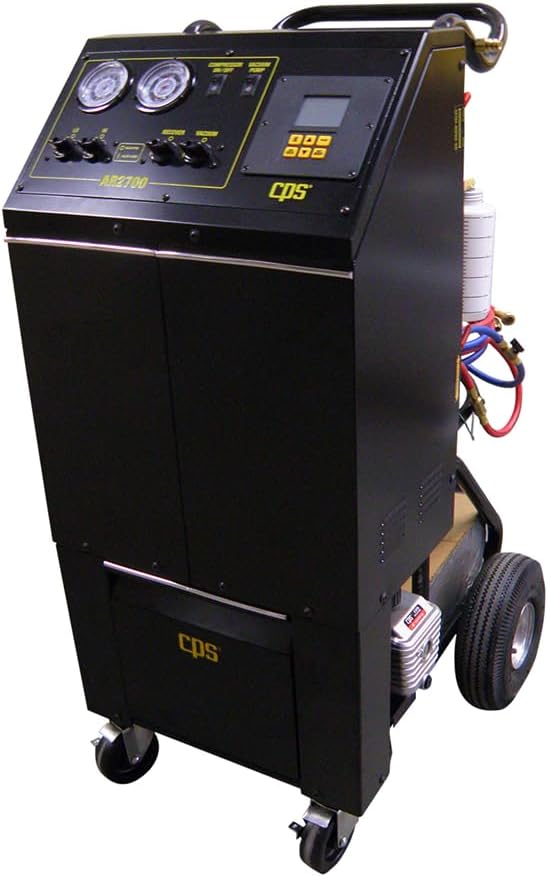
CPS CPSAR2700M Multi-Refrigerant Recovery and Recycling Machine
Category: Refrigerant Recovery
Check Current PriceThe CPSAR2700M delivers multi-refrigerant recovery and recycling ideal for busy auto shops. It includes a 6 CFM vacuum pump and 8-foot hoses. This tool sits in the Refrigerant Recovery category for professional service shops.
CPS CPSAR2700M Multi-Refrigerant Recovery and Recycling Machine
The reviewed CPSAR2700M refrigerant recovery unit handles R-134a and R-1234yf service routines in one machine. Shops value the 6 CFM pump for quicker evacuations compared with lower-capacity pumps and the all-metal cabinet for shop durability. The product supports practical Refrigerant Recovery with user-selectable language and a built-in tool drawer for organized hoses and fittings.
- Vacuum pump capacity: 6 CFM
- Hoses: 8 ft with manual couplers
- Cabinet: all-metal construction
- Included accessories: tool drawer and 8-foot hoses
- Price: USD 5,264.42 (manufacturer listing)
Owners should note the listing omits some critical installation details and certifications. The seller does not provide published power requirements, weight, or compatibility lists, so buyers must confirm those items before purchase. Knowing missing warranty terms and recovery rate helps shops plan investments and avoid downtime due to compatibility surprises.
What safety checks should techs perform before refrigerant recovery?
Technicians perform leak detection to prevent refrigerant loss and ensure legal compliance. They inspect hoses and couplers for cracks, check cylinder condition, and verify valve seals before connecting equipment. Technicians confirm system pressures using a gauge set and ensure engines or A/C compressors are disabled during recovery. They document refrigerant type and quantity to satisfy EPA regulations and shop records.
Multi-refrigerant recovery improves workflow in busy auto shops
CPS CPSAR2700M in-shop use reduces job time by avoiding separate recovery machines for different refrigerants. Integrating a single device for multiple refrigerant chemistries streamlines inventory, permits faster technician handoffs, and eliminates repeated cylinder swaps. Shops performing many A/C services benefit from centralized Refrigerant Recovery that cuts service steps and reduces tool clutter at the service bay.
For practical workflow gains, managers pair this unit with a mobile cart and dedicated recovery cylinders labeled by refrigerant type. A single technician can move between bays with the unit or assign a shop recovery station for peak hours. Using a standard hose length 8 feet with manual couplers maintains reach without excessive hose tangles in tight bays.
How can managers schedule recovery maintenance to cut downtime?
Managers schedule preventive maintenance to reduce shop downtime and preserve recovery performance. They book short weekly checks for hoses and connections and monthly pump oil level inspections to avoid unexpected failures. Managers set quarterly cylinder calibrations and service slots during low-demand afternoons to keep production moving. They track service history in a maintenance log to time replacements before shop-critical failures.
CPS CPSAR2700M Multi-Refrigerant Recovery and Recycling Machine guide
The high-capacity refrigerant recovery and recycling machine requires planned setup and operator training before first use in a shop. Installers should verify electrical supply, ventilation, and suitable cylinder storage despite missing published power requirements from the listing. The guide approach emphasizes confirming compatibility with vehicle refrigerants and preparing labeled recovery cylinders and an EPA-compliant disposal plan.
Buyers must request missing documentation such as warranty terms, installation instructions, and certification evidence before purchase. Comparing the machine against competitors like Robinair or Mastercool helps shops weigh includes, service networks, and spare-part availability. Concrete planning prevents downtime by establishing installation needs and spare parts lists ahead of delivery.
What training helps technicians operate multi-refrigerant units?
Technicians complete EPA 609 and manufacturer training to operate multi-refrigerant units safely. They learn refrigerant identification, proper cylinder handling, and safe recovery procedures directly from the product manual and certified courses. Hands-on sessions cover connecting 8-foot hoses, operating the 6 CFM vacuum pump, and performing post-recovery leak verification. Trained staff reduce accidental cross-contamination and legal exposure while maximizing recovery efficiency.
Follow-up questions buyers commonly search next
How long does a typical recovery take for a passenger car A/C system? Recovery time varies by system size and valve condition and by pump capacity such as 6 CFM. Shoppers should expect faster evacuation than 3 CFM pumps, but exact minutes depend on system leaks and starting pressure. Measure actual cycle times during initial commissions to set realistic labor estimates.
Can this unit service R-1234yf systems safely? The reviewed CPSAR2700M refrigerant recovery machine lists multi-refrigerant capability and handles modern refrigerants when used with correct adapter sets and procedures. Confirm with the seller whether factory service kits and compatible fittings for R-1234yf are included or available. Using the correct hoses and oil separators prevents cross-contamination and compliance issues.
What electrical and installation requirements must I prepare? The product listing omits power requirements and installation instructions, so buyers must obtain them from CPS or an authorized dealer. Prepare a 120V or 240V circuit only after verifying the unit s electrical rating to avoid breaker trips and warranty voids. Also plan cylinder storage, ventilation, and a secure mounting or cart location for safe daily use.