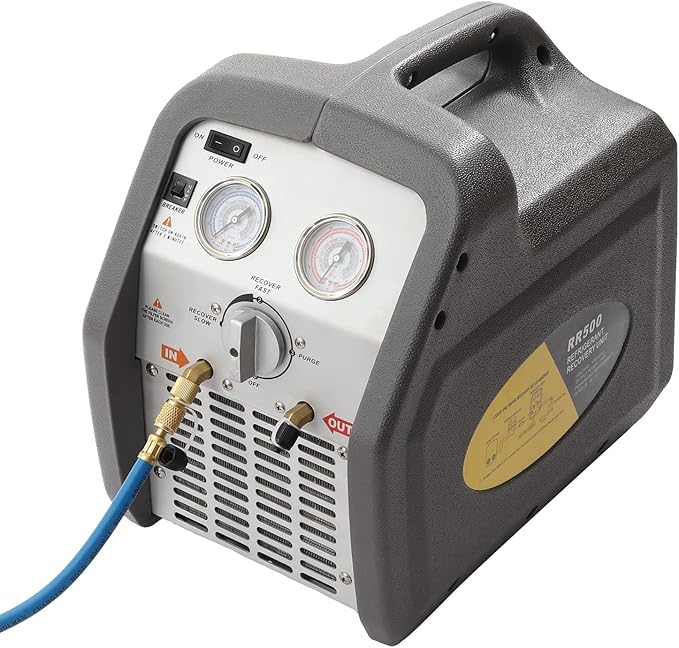
AW AW-QCJLFGE2USYB8 1HP Dual Cylinder Refrigerant Recovery Machine
Category: Refrigerant Recovery
Check Current PriceChoose AW AW-QCJLFGE2USYB8 1HP Dual Cylinder Refrigerant Recovery Machine for compact oil-less automotive service. It handles both liquid and vapor recovery modes for mobile work. This Refrigerant Recovery option suits technicians and DIYers working on vehicle A/C systems.
AW-QCJLFGE2USYB8 versus portable recovery units: specs and performance
AW AW-QCJLFGE2USYB8 1HP Dual Cylinder Refrigerant Recovery Machine offers an oil-less design and dual-mode reclaim. Oil-less means no compressor oil, reducing contamination and simpler maintenance; 1HP denotes one horsepower motor. This Refrigerant Recovery unit runs on standard AC and fits mobile automotive service workflows. Competing portable units often use oil-lubricated compressors or smaller motors that reduce throughput.
Key technical specifications and SKU details
- Model: AW-QCJLFGE2USYB8
- Motor power: 1HP
- Power supply: 110V-60Hz AC
- Oil-less: true (no oil lubrication)
- Recovery modes: liquid and vapor
- Intended use: automotive A/C line repair
- Price: 367.1 USD
- Protection plan: repairs, parts, labor, and shipping included
How do cooling capacity and charge speed differ between units?
AW AW-QCJLFGE2USYB8 achieves both liquid and vapor reclaim, enabling straightforward automotive service. Oil-less dual-cylinder architecture yields steady recovery for routine R134a and similar refrigerants. By contrast, smaller 1/2HP or single-cylinder models require longer runs for full system evacuations. Technicians benefit from shorter job cycles with higher-capacity, dual-cylinder designs during fleet work.
Choosing between portable recovery models for service reliability
AW AW-QCJLFGE2USYB8 1HP Dual Cylinder Refrigerant Recovery Machine balances portability with field durability and easy transport. Regular filter replacement, hose inspection, and scheduled calibration reduce breakdowns in portable recovery gear. Mastercool and Robinair models include established parts networks that accelerate repairs and spare-part sourcing. Field techs prefer units with available parts, clear diagnostics, and simple service procedures.
Which maintenance routines cut downtime for high-utilization jobs?
AW Refrigerant Recovery Unit reduces downtime when technicians perform scheduled filter swaps and hose inspections. Inspect hoses and fittings weekly on heavy-use rigs and replace desiccant or filters every one to three months. Perform vacuum integrity tests after each major service and log recovered weights to spot performance drift. Good record-keeping and local spare-part kits shorten roadside repair times.
AW-QCJLFGE2USYB8 value analysis versus other portable recovery options
AW AW-QCJLFGE2USYB8 1HP Dual Cylinder Refrigerant Recovery Machine costs 367.1 USD, providing competitive entry-level value. Comparable Robinair and Mastercool units often list between 400 and 900 dollars, depending on included includes. Amazon protection plan adds repair, parts, labor, and shipping coverage when purchased within thirty days. Technicians should weigh initial price against part availability and repair turnaround time.
What total cost of ownership factors matter for field technicians?
AW-QCJLFGE2USYB8 reduces operating costs by eliminating oil changes and simplifying routine maintenance. Evaluate total cost by considering spare-part availability, expected lifespan, average repair times, and protection-plan coverage. Follow-ups: size by refrigerant and expected lb/hr; oil-less units cut contamination but may limit peak throughput. The practical trade-off: lower consumable costs versus potential capacity limits on large commercial loads.
Follow-up questions readers search next: How do I size a recovery unit for different refrigerants, and where to source replacement parts quickly? Size units by refrigerant type and expected pounds-per-hour workload; prioritize vendors with regional parts warehouses. How reliable are oil-less units in long-term service? Oil-less units lower contamination risks and routine servicing, but evaluate throughput limits for heavy-duty shops.