
Refrigerant Recovery Pro is reader-supported: some links on this page are affiliate links, and as an Amazon Associate Refrigerant Recovery Pro earns from qualifying purchases at no extra cost to you. Learn more.
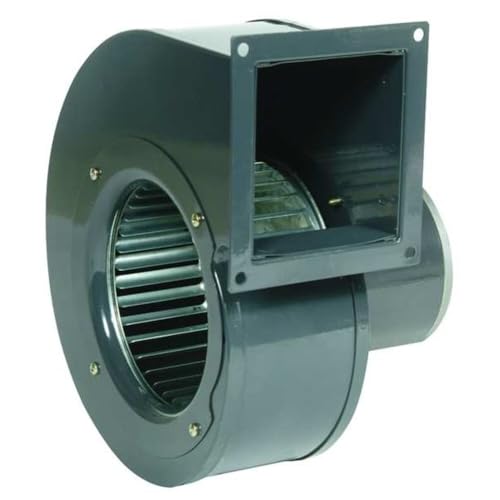
You must confirm your hood requires no more than 485 CFM before ordering, and you should verify your ductwork dimensions to ensure the 5-5/16″ inlet and outlet diameters match your existing pipes to prevent pressure loss.
Dayton 1TDR7 airflow capacity and static pressure limitations for fume hoods
The Dayton 1TDR7 moves 485 CFM at a rotational speed of 1650 rpm. While this meets the minimum 400 CFM threshold for some fume hoods, it may struggle if your setup requires the upper 800 CFM limit. Because airflow drops as resistance increases, you should check the specific static pressure (the resistance the fan must overcome) of your ducting, as this value is not stated in the product data. For a laboratory environment, it is important to note that this model does not state a service factor, which determines if the motor can run 24/7 without overheating.
For a complete breakdown of performance and features, see our full Dayton 1TDR7 review.
What to Check Before Buying the Dayton 1TDR7
Because centrifugal blowers are often used in high-demand ventilation, check these specific requirements before purchasing:
You can find the final verdict on the Dayton 1TDR7’s ultimate performance rating at the end of our analysis.
- Confirm your fume hood‘s maximum CFM requirement is 485 or lower.
- Measure your ductwork to ensure it accepts the 5-5/16″ port size without adapters.
- Verify your laboratory’s electrical infrastructure provides 115V power.
- Check if your application requires a specific static pressure rating that exceeds standard ventilation.
- Confirm that your installation site does not require a power cord, as this unit does not include one.
Comparing the Dayton 1TDR7 to Other Blower Options
The Dayton 1TDR7 is a capable choice for smaller ventilation tasks like radon mitigation or crawlspace airflow, where it provides ample capacity. However, buyers with high-volume laboratory needs or complex industrial ducting may need to look at alternatives. If your project requires precise flow control, you might prefer a system with integrated variable frequency drives, as this model is not recommended for speed control. Users seeking a “plug-and-play” solution should also consider that this unit lacks a built-in switch or cord.
Review the technical details in our Dayton 1TDR7 spec breakdown to see if it meets your requirements.
If your laboratory hood has a modest airflow requirement and you have a way to hardwire the unit into your power supply, the Dayton 1TDR7 is a practical choice. For high-demand professional hoods requiring consistent high-pressure output, you should look for a blower with a higher CFM rating.